
Why do millennials volunteer?
Compiled by Adrienne Turnbull-Reilly, Paul Revere House Museum and Jen Duckett, Museum of Fine Arts, Boston
Museums of all sizes thrive on the work and dedication of volunteers. Depending on the needs of a museum, volunteers may perform tasks ranging from teaching educational programs to planning events to serving on an advisory board. Regardless of size or scope, volunteers fulfill crucial roles necessary to the survival of our institutions. As museums look to the future and strive to recruit the next generation of volunteers, millennials are often an untapped resource. To learn more about why millennials choose to volunteer at cultural institutions, we spoke with two young and emerging museum professionals who also spend their time outside of work volunteering at museums.
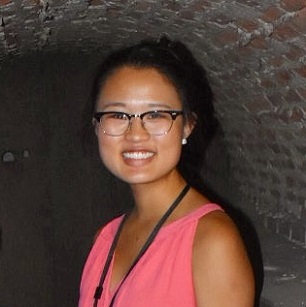
Sharon Kong-Perring is a Museum Educator at the Paul Revere House Museum, whose duties span from visitor services to collections. She is currently working towards inventorying an archeological collection while her previous research for the museum was recently published in the organization’s quarterly publication. Sharon also serves on the Board of Directors at the Loring-Greenough House in Jamaica Plain. As a volunteer at the Loring-Greenough House, Sharon works to fulfill the museum’s mission by building relationships within the community through designing and implementing tours and programming as well as through special projects. Sharon seeks to introduce programs that encourage visitation from underrepresented groups, as well as programs that interest a wider visitation in general.
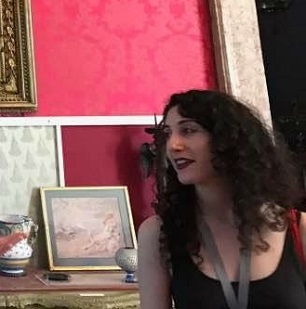
Marie Palladino is the Educational Programs Coordinator at The Mary Baker Eddy Library in Boston, an Education Consultant for the Italian American Museum in New York, and has served as a volunteer at the Isabella Stewart Gardner Museum since 2013. As a volunteer working on the front line, Marie acts as a point of reference for visitors with questions about the museum’s history, the collection, programming, accessibility and much more. As a volunteer who has been with the institution for over five years, Marie also assists the education department in the training of new volunteers by guiding them through their initial shifts.
What motivated you to volunteer? How did you choose an institution?
SKP: It was a combination of getting career experience as a graduate student, but also a genuine interest in the history and material culture of the site that first motivated me to volunteer. I have also always enjoyed getting involved in a community, and volunteering, in any capacity and at any age, provides an unlimited means of experiencing new aspects of your community and engaging in narratives you otherwise would not.
Part of choosing the Loring-Greenough House was location; it is local to where I live in Boston and for someone new to the city, a short commute for volunteering was a little less daunting. However, another major reason why I chose this institution in particular is that it is all volunteer-run. These kinds of volunteer-based institutions are always in desperate need of new hands and minds to help every facet of the organization’s operation. As dramatic as it may sound, volunteers are the lifeblood of an organization like mine - they are the reason why it survives.
MP: The Gardner Museum is a part of my family’s immigration story. As a child my family would always talk about Mrs. Gardner because my dad’s grandfather, Vito Palladino, who had come over from Frosinone, Italy, worked for her directly in the 1910s and 1920s. He was a botanist and he had learned to work the great estates in England as a child after being sent away from his ancestral home due to lack of resources. His first job in the United States was at the Gardner Museum and he would go on to work there for forty years. He would bring my father into the museum when he was a little boy and taught him many of the techniques he and the botanists used to create special flowers, primarily orchids and roses. The museum sent him orchids once a month in the mail until he died in 1981. After meeting with the Museum’s archivist, my father and I found out that Vito was one of four senior botanists and even helped design elements of the famous courtyard and the former rose garden. He loved Mrs. Gardner and cherished the years he worked directly with her. His story in part has inspired me to work in the museum field.
What do you feel like is the benefit of volunteering?
SKP: On a professional level, I feel like I have gained valuable experience in ways that I would not have been able to in a paid capacity since I did not have experience in it before. My involvement at the Loring-Greenough House runs the gamut - I am chairperson for the programs committee, interim chairperson for the collections committee, an educational docent. In every role, I am learning new skills and garnering more and more experience that fuels my professional abilities. On a personal level, this is my outlet to “escape” the confines of departmental organization and duties limited to a job title within the museum, or even for those who don’t even work in a museum. For example, we have a volunteer in our collections committee who is an English language teacher, but also had a passion for historical homes and the material culture within them.
MP: My priority as a volunteer has always been the visitor experience. I answer visitor inquiries and these questions range from topics on accessibility to art history, wayfinding, and programming. I’m also guiding visitors towards finding “a-ha” moments and making meaningful connections between their personal experiences and the collection. Helping visitors feel comfortable, welcomed, appreciated, and validated is vital in my work as a museum educator. Doing so grants me that firsthand knowledge and the perspective of a range of different types of learners and audiences. For this reason volunteering is one of the best resources I have in strengthening my practice as a museum professional – I actually get to study museum visitors in their natural habitat!
I can be having a challenging week or day and then go in to volunteer and I’ll feel 90% better by the time I leave after my 3 hour shift. Maybe it’s because I am able to experience exploring the collection again for the first time vicariously through each new visitor. There is something magical about the space and the way in which Mrs. Gardner created it. I think that is the main takeaway I try to impart to the people I encounter along with an idea of her vision and essence.
What advice would you give other YEPs thinking about volunteering?
SKP: Stop waiting for the right moment. It is very easy to put something off, especially when we don’t see an immediately apparent benefit (i.e. pay). However, many of these organizations need dynamic thinkers who have experience in the museum and preservation fields. Younger volunteers, especially, bring in fresh perspectives and are on the cutting edge of best practices, which these volunteer-based organizations really do need. I might not have millions of dollars to donate to the museum of my choice, but I do have the time.
MP: My advice is to volunteer! If you are a young and emerging museum professional, it’s extremely beneficial to “get your hands dirty” and to really be down in the trenches in order to see how people learn, how people get frustrated working through interpreting things, how people sometimes don’t feel heard, and how people arrive at those “a-ha” moments. You need to be there to see the problems to fix them. There’s no better place to investigate these things than when you’re volunteering in gallery spaces.
How do you view your volunteerism within the larger landscape of museums or volunteerism in general?
SKP: Within museums in particular, I do see a startling trend: an absence of young professionals in volunteer capacities. In my personal experience, volunteering in any capacity, my age is usually the exception, not the rule. Recruitment of new volunteers, especially young professionals, is a big challenge for my organization. People are getting busier, lives are getting more complicated, so I think the effort to get involved in something that doesn’t have an immediate outcome or benefit gets lost. You don’t have to be all in or all out. There are different levels of time commitments.
Do you imagine volunteering throughout your career?
SKP: Yes, I imagine so. I have always liked being busy and always liked having an organization or cause that I can work on or with that was not necessarily work related. I know I will be involved at least somewhat for most, if not all of my career. Though, once you volunteer for an organization as long as I have with the Loring-Greenough House, you develop a personal connection. I want to see it successful; I want to open the grounds to different communities, I want to facilitate growth – these are all my personal hopes for the institution.
MP: I think that I’ll always want to volunteer somewhere. I’m at a point in my career where I’m looking to expand my skill set, and volunteering can help with that as you meet so many different types of people with varied experiences. Not all volunteers in art museums have art history backgrounds. Many have other skills aside from customer service and base knowledge in the collection. This is a fruitful tactic as it gives them ways to connect in conversation with visitors that are not only interested in art. I’m also interested in learning how to manage and develop volunteer programming and to work with enhancing the volunteer experience.