Embracing the “Other Duties”: What I’ve Learned from Beginning my Career at a Small Museum
By Faithe Miller Lakowicz, Curator, Remick Country Doctor Museum & Farm
As a board member for the Small Museum Association, and curator of a small history museum in a tiny rural town, I spend a good deal of time discussing, contemplating, and advocating for small museums. There is no standardized definition of what constitutes a “small museum”: some people and organizations use operating budget as the key metric; some look to staff or visitation size; and others focus on the geographic footprint of the institution: how much square footage is available for exhibitions, collections, and public programs. For my part, I have my own criterion, which I always say half (but certainly no more than half) jokingly: when you work for a large museum, situations arise and the staff say, “It’s okay, we have someone who takes care of that.” When you work at a small museum, YOU are the one who takes care of it.
For two years, I have been curator at the Remick Country Doctor Museum & Farm, a working farm and historic farmstead with roughly a dozen staff members at any given time (we currently number 13 at the time of this writing), just over half of whom are full-time. Our site includes two historic homes (one of which contains a 115-year-old doctors’ office and pharmacy), multiple historic and reproduction outbuildings, herb and vegetable gardens, hiking trails, and animal pastures—all located on dozens of acres in the village of Tamworth, in the foothills of New Hampshire’s White Mountains.
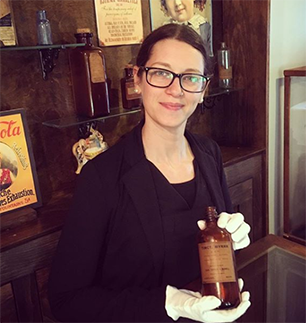
Depending on the audience, I might choose to describe my job in any number of ways. On paper, I “provide oversight for Remick’s collections, exhibitions, and historic structures.” To a fellow museum worker, I might resort to a hybridization of familiar job titles, describing my role as a combination registrar/collections manager/archivist/exhibit designer/fabricator/docent/preservationist/ /housekeeper/facilities personnel. When conducting house tours for the public, I often introduce myself by saying simply, “I take care of everything old.” The truth is, my day-to-day is a constant balancing act, which often feels like a Frankenstein’s Monster of unrelated parts. Over the past two years, an unexpected visitor to the museum might have found me writing a collections management policy; accessioning and deaccessioning artifacts; harvesting pond ice with historic tools; giving a public lecture; mucking out a flooded basement; painting children’s faces; decorating the perfect mid-century Christmas tree; framing a painting; replacing lightbulbs; and even conducting light masonry and landscaping. My professional attire vacillates from business casual to jeans and combat boots—sometimes in the same day. This is not the job that comes to most people’s minds when they envision a curator.
Having said that, for all the immensity of my job—both on paper and in reality—I wouldn’t have it any other way. As a graduate student, I gained experience working, volunteering, and interning in various roles for diverse museums. I wanted to move out of my comfort zone, and learn through experience where my true strengths and interests lay. I found that many of the aspects that drew me to museum work in the first place—the ability to work independently and creatively, and to balance cerebral “desk work” with more physically active tasks—were doubly applicable in a smaller museum environment. I learned that I thrive on a small team, with broad responsibilities, and that too much specialization makes me restless. From an institutional perspective, I have found that small institutions enjoy a nimbleness that seems to elude their larger counterparts: shorter chains of command make for greater autonomy across the board. Finally, it’s a matter of perspective: I try not to think that have to do a little bit of everything, so much as that I get to do it all. Yes, a multifaceted job description requires a great deal of energy, motivation, and flexibility from me as an employee—but, in turn, I have honed skills I never knew I had, exceeded my own expectations, and bolstered my resume tremendously.
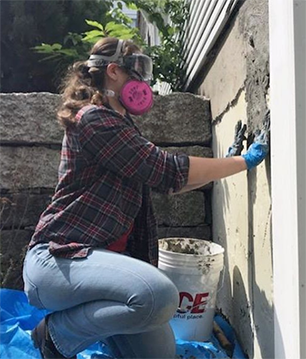
I particularly hope this information finds its way into the hands of emerging museum professionals. Having graduated with my master’s degree and entered the museum field full-time in 2015, I know all too well how daunting the job search is, and how difficult it can be to make inroads when it feels that there are too many applicants filling far too few positions. It’s an immensely competitive field. With that in mind, it behooves today’s job-seeker to take note that (using budget as a metric) the majority of U.S. museums are actually small institutions (Ingraham, 2014). These are the quirky science centers, the wholehearted history museums, and the unorthodox art galleries that are perhaps a bit off the beaten path. They likely have few paid staff members, and may be located in rural or sparsely populated areas. These museums are not as high-profile as the Smithsonian, nor as prestigious as The Met—they aren’t what your mother dreamed of when you announced you’d applied for a degree in Museum Studies. (Believe me, I’d rather have my photo taken wielding a set of white gloves than a toilet plunger, any day.) Yet these small museums are pillars of their communities—stewarding cultural heritage and educating the public at a level that could almost be described as grassroots. In addition, many small communities afford young professionals affordable housing and cost-of-living options, allowing a smoother transition into the professional world after college or graduate school.
A diverse job description can feel overwhelming. Burnout and exhaustion are real threats—and I have to be very deliberate about providing self-care, setting healthy boundaries, and collaborating or asking for help when needed. Mowing lawns, scrubbing windows, and juggling education with visitor services with collections management may sound intimidating: it is. It may sound like this sort of job demands immense talent and dedication from staff: it does. But I would encourage anyone searching for a new or different position in the museum field—particularly newcomers in the early stages of their career—to consider the benefits of being “a big fish in a little pond.” At a small museum, you will never be overlooked. You will learn every day. You will constantly surprise yourself. And who knows: perhaps, someday, you too won’t be able to imagine yourself working any other way.
Works Cited:
Ingraham, C. (2014, June 13). There are more museums in the U.S. than there are Starbucks and McDonalds—combined. Retrieved from https://www.washingtonpost.com/news/wonk/wp/2014/06/13/there-are-more-museums-in-the-us-than-there-are-starbucks-and-mcdonalds-combined/