From the Fellow
By Alex Lehning, Director & Librarian, Saint Albans Museum
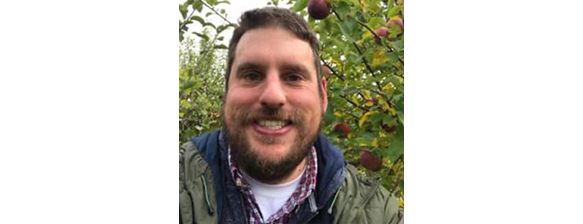
Alex Lehning (he/him) is the 2019/20 NEMA Fellow. As part of the fellowship Alex is writing a series of articles for the NEMA community.
Recently in a September program, President Trump and the White House History Conference denounced the 1619 Project, the Smithsonian Institute, the Zinn Education Project, and other educational and professional learning programs which utilize critical race theory and cultural competency frameworks as “forced into our children’s schools...imposed into workplace trainings, and...deployed to rip apart friends, neighbors and families.”[1] He concluded that the purpose of the 1619 Project ( and we can include the other efforts named) was to push Americans to feel “ashamed of their own history.”[2]
I have taught thousands of students, from ages 4 to 93, over the past decade - both at museums as well as in and out of the classroom. Nothing could be further from the truth.
The foundation of historical thinking is the capacity to ask thoughtful questions, to seek deeper meaning in how we structure and engage with the world, and to encourage intentional responses based upon an analysis of evidence. As educators, families, and neighbors, we already celebrate that process of discovery throughout our community each and every day. How we learn is always evolving (see 2020) - and with each generation comes access to new technology, new research opportunities, and new approaches to more fully understanding the past.
The current US Millennial Holocaust Knowledge & Awareness Survey (as summarized by Seven Days) revealed that “a disturbing percentage of Vermonters couldn’t name a single concentration camp or ghetto, had no idea how many Jews were murdered by the Nazis during World War II, and believe that the Jews were responsible for their own genocide.” And the response of our ‘brave little state’ to that crisis of critical information? “64 percent of respondents believe that Holocaust education should be compulsory in school, and nearly eight in 10 said it’s important to teach the Holocaust so that it doesn’t happen again.” [3] Our answer to the promise of “Never again,” is simple - requiring an honest, open, and thorough exploration of genocide.
We can, and must, find new ways to explore and understand our history. When studying the Holocaust or other historical eras with parallels (such as the institutional role of eugenics in Vermont, or the legacy of slavery and the impact of systemic racism), we must come to terms with the truth...even when it is difficult. This is not about shame, but rather growth. It is possible to be historically accurate - and yes, patriotic - simultaneously.
In a recent interview, Lonnie Bunch III - secretary of the Smithsonian Institute (and the founding director of the National Museum of African American History & Culture) - offered this wisdom: “History often teaches us to embrace ambiguity, to understand there aren’t simple answers to complex questions - and Americans tend to like simple answers to complex questions. So the challenge is to use history to help the public feel comfortable with nuance and complexity.”[4]
When we ask our students - and ourselves - to respond to those deeper queries, to think critically, and to embrace diverse perspectives and ideas - we live up to the equitable ideals of America, rather than empowering its hagiography. I would ask Trump to reexamine the purpose of the National Archives museum, where he chose to give his speech: “Records help us claim our rights and entitlements, hold our elected officials accountable for their actions, and document our history as a nation.”[5] To put it another way, archives and history help make us better individuals, and together a better nation.
The tenants of our ‘more perfect union’ are a work-in-progress, which thrive with an ongoing commitment to empathetic renewal. We must amplify marginalized voices, seek out new points of view, challenge old assumptions, and root out systemic discrimination. America remains an experiment which requires our full investment to sustain those values we cherish - not some isolated example of exceptionalism in an ever-changing world.
Trump again escalated this troubling narrative with a proclamation issued by the White House just before Indigenous Peoples’ Day: “For…Americans of every background – Columbus remains a legendary figure. Sadly, in recent years, radical activists have sought to undermine Christopher Columbus’s legacy. These extremists seek to replace discussion of his vast contributions with talk of failings, his discoveries with atrocities, and his achievements with transgressions. Rather than learn from our history, this radical ideology and its adherents seek to revise it, deprive it of any splendor, and mark it as inherently sinister. They seek to squash any dissent from their orthodoxy. We must not give in to these tactics or consent to such a bleak view of our history. We must teach future generations about our storied heritage, starting with the protection of monuments to our intrepid heroes like Columbus.”[6]
What Trump is promoting with those words is not history, but propaganda. Humanity is not perfect, and our progress is defined in part by a willingness and ability to acknowledge and wrestle with our past. An authentic learning experience, especially one that is historically-grounded, embraces the opportunities that can arise from discomfort - and seeks out challenges which demand that together we encourage reflection, repair, and reconciliation towards a brighter future.
The only revision needed here is an apology from Trump and historians who enable his words. There is simply nothing radical about honesty, except perhaps in finding the resilience necessary within ourselves to speak the truth.
The point is not to live in the past, rather to make good use of our understanding to navigate the present and to strive towards a more equitable future. Trump is asking us to prioritize monuments and to favor polarized narratives instead of our respecting and acknowledging the complexities of our own personal stories as people. I would argue that our focus should remain on the questions & answers which historical thinking compel us to address.
As individuals and a society, we are so much more than oversimplified symbols - and we should take comfort as well as courage in our capacity to engage with both the lessons and challenges of historical complexity.
[1] Michael Crowley, “Trump Calls for ‘Patriotic Education’ to Defend American History From the Left,” New York Times, September 17, 2020, accessed at https://www.nytimes.com/2020/09/17/us/politics/trump-patriotic-education.html
[2] Michael Crowley, “Trump Calls for ‘Patriotic Education’ to Defend American History From the Left,” New York Times, September 17, 2020, accessed at https://www.nytimes.com/2020/09/17/us/politics/trump-patriotic-education.html
[3] Ken Picard, “Survey of Young Vermonters Highlights Ignorance of the Holocaust,” Seven Days, September 16, 2020, accessible at https://www.sevendaysvt.com/LiveCulture/archives/2020/09/16/survey-of-young-vermonters-highlights-ignorance-of-the-holocaust
[4] David, Gelles, “Smithsonian’s Leader Says ‘Museums Have a Social Justice Role to Play,’ New York Times, July 2, 2020 accessed at: https://www.nytimes.com/2020/07/02/business/smithsonian-lonnie-bunch-corner-office.html
[5] US National Archives & Records Administration, “General Leaflet Number One: About the National Archives of the United States,” accessed at: https://www.archives.gov/publications/general-info-leaflets/1-about-archives.html
[6] Donald J. Trump, “Proclamation on Columbus Day, 2020,” issued October 9, 2020, accessible at rhttps://www.whitehouse.gov/presidential-actions/proclamation-columbus-day-2020/