Financing the Construction of a Creative Economy
Questions by Leah B. Thibault, Coastal Enterprises (CEI), Answers from Suzette McAvoy, Executive Director and Chief Curator, CMCA and Christopher Brownawell, Director, Farnsworth Art Museum
The prosperity from the creative economy is being shared in mid-coast Maine. The tourist economy there has steadily grown with the creative one. Museums serve as anchor institutions in Rockland, Maine: the Farnsworth Art Museum and Center for Maine Contemporary Art (CMCA) are destinations, encouraging the establishment of art galleries, shops, and award-winning restaurants that pepper Main Street there. Hotels, bed and breakfasts, and inns report full occupancy in busy summer and fall months. Most recently, Amtrak’s Downeaster train service to Boston has announced an expanded route along the coast to Rockland.
CMCA and The Farnsworth have become essential for making art an accessible and vital part of contemporary life. Through their progressive, forward-looking programming and exhibits of larger-scale installations, both are giving back, often in partnerships with other community organizations including local schools.
As their peers are aware, the need for funding never abates. On those occasions where there is a gap in the capital stack between donor gifts and bank loans, these two museums were able to work with Coastal Enterprises, Inc. (CEI), an impact investor that could find creative financing solutions for these art institutions. The projects fit within CEI’s mission to build an economy that works for everyone in its home state of Maine and rural regions across the country. Other creative economy projects in its portfolio include the expansion of Grime Studios, in Portland, Maine, the restoration of the Hanover Theater in Worcester, Massachusetts and developing a mixed hotel / gallery property in Marfa, Texas.
The following conversation is among CEI’s team and CMCA Executive Director + Chief Curator Suzette McAvoy and Farnsworth Art Museum Director Christopher Brownawell.
CEI: The Farnsworth Art Museum has been in Rockland since 1948, when the area was known primarily for its fish processing plants, whereas now, Rockland is primarily a service-based economy, with retail, accommodation, food and the arts making up around a third of the employment. How did the shift happen and what was the Farnsworth’s role in this changing economy?
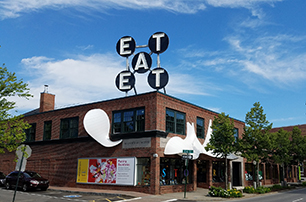
CB: The Farnsworth has considered itself a vital part of this community since the museum’s founding in 1948 when the local economy was driven primarily through commercial fishing. In 1994, we undertook our first expansion, adding a storefront and entrance onto Rockland’s Main Street. This dramatically enhanced our visibility and relationship to the community by bringing increased foot traffic and visitors to downtown businesses and prompting a growth in nearby commercial art galleries. This started the outward facing transition.
CEI: Though the Center for Maine Contemporary Art (CMCA) has been supporting and exhibiting Maine artists across the state since 1952, it announced its decision to settle in Rockland in 2015. Why did it choose Rockland for its permanent home?
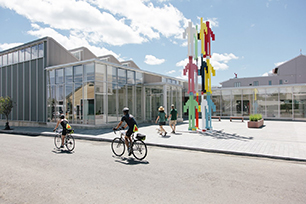
SM: CMCA’s former location in a residential neighborhood in the nearby coastal village of Rockport lacked both visibility and foot traffic. So when the decision was made to relocate, communities throughout the State were considered, as CMCA’s audience and mission are statewide. But when the property on Winter Street in Rockland came onto the market, we knew it was ideal. It’s just one block from the Farnsworth and adjacent to the historic Strand Theatre, as well as in easy walking distance of nearly two dozen art galleries, restaurants, hotels, and shops, not to mention city parking. Along with the Strand and the Farnsworth, CMCA anchors Rockland as a year-round center for the arts in Maine.
CEI: Both museums recently made significant capital investments in your proprieties, the Farnsworth in renovations and upgrades to its galleries and a number of historic properties and the CMCA in a new 12,000 square foot facility. What were some of the challenges you faced in attracting and securing capital? Would you say these are unique to museums? What advice would you give to other institutions looking to finance capital improvements?
SM: The $5.2 million campaign for the new building was the first capital campaign in CMCA’s history, and certainly its most significant fundraising effort to date. The challenge was securing funding through the construction phase before we had equity in the building and before all the pledges had come through. It took a great deal of patience and persistence to maintain the campaign’s momentum and keep a positive outlook over the 3 years of the campaign. Fortunately the CMCA board was fully committed and we had a great working relationship with our contractor and architect. I would say that was key to the project. And we were fortunate to work with a local bank and with CEI, lenders that really worked with us on creating a financing package that fit CMCA’s unique situation.
CB: The Farnsworth made significant improvements to its Rockland campus of six buildings and 25,000 sq. ft. of gallery space. The project also included work on the Olson House in Cushing, Maine, the site of Andrew Wyeth’s iconic 1948 painting, Christina World. Raising funds for infrastructure is never easy. It’s not the shiny new building or gallery space but our project was critical to providing behind the scenes upgrades that matter to ensuring our visitors an exceptional visitor experience. This project also provided the opportunity to upgrade our environmental and security systems. We were fortunate to qualify for New Markets Tax Credit Financing. Our $17.75m project made up of state and federal tax credits provided the source to make this major campus renovation a reality. Traditional capital campaigns have always been a primary source to finance capital projects, however there are other programs such as the New Markets Tax Credits program that could be a potential solution to securing capital for museums.
CEI: Based on a 2010 Maine Arts Commission report, approximately 70% percent of visitors to the Farnworth were from outside Maine. How do you see that affect the local economy?
CB: There no debating that the Farnsworth is a key economic driver for local community. This past year alone, over 70,000 people visited the Farnsworth. Our recent exhibitions have garnered reviews in national magazines and newspapers such as the Wall Street Journal and the cover of AAA Magazine. Folks are literally flying into Rockland to visit what the Portland Press Herald called the “Art Capital of Maine.” According to a recent study, the Farnsworth’s economic impact is an estimated $58 million annually which equates to over 590 full time jobs with a pay of over $18 million. The study found that the typical visitor spends up to 3 days in Rockland. That translates to revenue for our Hotels and Inns, our multiple James Beard honored restaurants, our retail shops and even our gas stations and convenience stores.
SM: The annual economic impact of the new CMCA is projected to be nearly $35 million statewide, representing the equivalency of over 300 jobs earning pay of over $10 million, and generating $1.9 million in state and local revenues. We had over 1,800 people attend our opening day in June 2016, and nearly 40,000 visitors in our first full year of operations, surpassing our projections of 35,000. In addition, we’ve had more than 200 press articles in publications nationwide, and even a few internationally. One thing we’ve noticed is that our attendance is increasing in the spring and fall shoulder seasons. With CMCA, the Farnsworth, and the Strand to visit, Rockland is becoming more of a year-round destination. Our visitors shop and eat in neighboring businesses, and stay in local inns and hotels; it’s a ripple effect into the local economy.
CEI: On the flip side, only 9% of visitors to the Farnsworth were from a 50-mile radius of Rockland. What are both museums doing to engage with the local community on a programmatic basis?
CB: The Farnsworth wouldn’t be here without the local community and we are making every effort to engage with our midcoast residents on a year-round basis. The Farnsworth always offers free admission to all Rockland residents and our seasonal community events draw thousands of local visitors. Our Share the Wonder celebration is a perfect example. On the Saturday after Thanksgiving we open our galleries free-of-charge to all and offer special programming such as live music, theater, craft activities for both children and adults and special in-gallery treasure hunts. The event typically draws over 1,200 people in a three-hour span.
On the educational side, we’ve been working for the past 7 years with our local schools on a year-long arts integration program called Stories of the Land and its People. It’s a collaboration between the Farnsworth and 6 local schools that involves over 300 4th and 7th graders. The arts-integrated learning experience sees educators, classroom teachers, students and teaching artists collaborate to explore curricular standards through inquiry-based learning in the classroom, at the museum and during field trips into our local communities.
SM: The heart of the new CMCA is our community courtyard, which is open to the public and is a gathering place for all ages and demographics. During Rockland’s enormously popular First Fridays, when all of the galleries and museums are open for the evening free of charge, we’ve had live music, dance performances, interactive art installations, and even bonfires and marshmallow roasting in the courtyard.
We also engage the community directly through our ArtLab arts education program; our philosophy is “creating community through creating art.” We do this by offering monthly ArtLab for All Ages workshops free-of-charge, and partnering with local organizations like the Rockland After School Association to offer free after school ArtLabs for middle and high school students, and the YMCA to offer free ArtLab excursions for their summer campers.
CEI: What future role do you see your institutions playing in both the economy and character of the Rockland and mid-Coast Maine communities?
CB: The economy and the character of Rockland has changed so much over the past decade or so and the creative economy is part and parcel of it now. Our hope is that the other local economic forces that have always been a part of our community, such as the vibrant fishing industry, continue to thrive. But the arts are here to stay. The Farnsworth has been a major part of Rockland’s make-up since 1948 and with our partners at CMCA and the Strand offering such terrific programming as well—not to mention the many wonderful galleries that line Main Street from North to South— this town has so much culture to offer year-round that we definitely see Rockland’s standing as the Art Capital of Maine becoming even more established.
SM: CMCA’s progressive, forward-looking programming and our new contemporary building are drawing a more diverse and younger audience to Rockland. One of our goals is to help attract and retain young people to the Midcoast to live and work. We know that as a non-profit, CMCA’s future depends on a robust economy and vibrant community, not just in the Midcoast, but also in all of Maine.
CEI: What advice would you give to communities looking to attract or build an arts-based economy?
SM: We are fortunate that Midcoast Maine has long been a magnet for artists from around the country, including some of the best known of our times, like Alex Katz, the Wyeths, and Robert Indiana, to name just a few, so there is a historic base for us to build on. That said we have to constantly be mindful of keeping our programming fresh and relevant to attract new audiences and donors, and to use every resource at our disposal to make the case for importance of the arts in the economy and contemporary culture. That means getting to know the folks in local government, joining the chamber of commerce, participating in the downtown merchants group, hosting get acquainted nights for teachers, maintaining a good relationship with the press, and generally being as open and welcoming as possible. The arts are not just for the elite but really truly are of impact and value to the whole community and everyone in Maine.