From the Fellow: Collective Well-Being and Creative Self-Care for the Museum Professional
By Arthurina Fears, Curator of Education and Programs, Davis Museum at Wellesley College
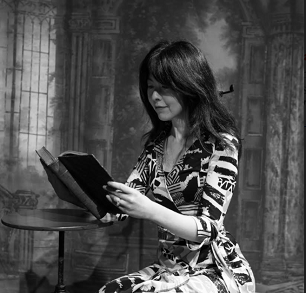
Arthurina Fears (she/her) is the 2020/21 NEMA Fellow. As part of the fellowship Arthurina is writing a series of articles for the NEMA community.
Over the past year, museum professionals have greatly pivoted and have found creative and innovative ways to bring museums directly to our audiences in a virtual sphere in order to create meaningful, engaging, and reflective experiences. We have completely reconceptualized programs and exhibitions, and in addition to reaching our audiences, we have at times broadened access on not only a regional or national, but also a global level. Museums have been doing extraordinary work as we have focused on bringing our institutions to our communities and beyond.
We are utilizing our collections as a way for positive social change. Knowing first-hand how museums are naturally social spaces, we advocate to ensure that our museums are safe and welcome places for all and through bridging barriers, striving to make a difference in museum visitors’ lives.
Yet we are all experiencing a shared trauma. The undercurrent remains in that we are creating these experiences to make sure we stay relevant due to a global pandemic and have had little time to process the reality that permeates. Whether one participates in a virtual tour or is in a video call, these ongoing, yet many times necessary, actions are a constant reminder of the pandemic. The ways in which technology can bring us together can also be detrimental to our mental health, particularly with the blur between work/life balance, daily screen time, and the very real fatigue from virtual meetings, tours, and programs.
In many ways, certain aspects of museums are more accessible, yet inequities become more visible, such as computer and internet access and living situations; it has become quite invasive and disorienting. We are experiencing a societal crisis with racial injustice and the impact of COVID-19. For me, as an Asian-American, it is an especially troubling time. We, our employees, colleagues, docents, and volunteers are struggling in some way and feeling burnout. Seeing this takes a personal toll, made even more difficult via distance. Furthermore, the pandemic has significantly impacted working mothers, resulting in inequities to a field oftentimes already difficult to enter.
It is too much. It is exhausting. We are experiencing something unfathomable. We are in this constant, draining on-the-go motion; where is the time to grieve?
In response to the challenges of the past year, more museums have implemented wellness initiatives. At my own institution, the Davis Museum at Wellesley College, we have reimagined our ongoing mindful meditation program in which visitors experience present-moment awareness through focusing on a work of art, including through a social media collaboration with the College’s counseling service, and then to a virtual, live program. As a result of the stressors we saw facing college students in particular, we developed an art and wellness program with community-building activities entailing close-looking, grounding activities, creative responses, and a sense of place.
Museums have been addressing our communities’ needs, yet we also need to focus on self-care to not only sustain our efforts and to recharge, but to also be able to have a creative outlet. Self-care is not a trend. We must take care of ourselves in order to take care of others, and also set a positive example for our colleagues, employees, and volunteers. It is incredibly heartening to see the increase in programs focusing on well-being, notably the Montreal Museum of Fine Arts which has a significant museotherapy program, grounded in multiple expressive therapies. In fact, doctors have written prescriptions for patients to visit the museum. The connection between creativity and wellness within the museum context is profound.
We have put a lot of thought and collaborative effort into making our own museums accessible, so let’s do something welcoming and creative for ourselves, too. It is important to focus on the positive and to realize that we are all in this together. I think that more barriers have been broken as we are able to connect with each other and learn how one other’s institutions have adapted, innovated, and reimagined what is possible.
Of course, as a museum educator, I have developed a few prompts to consider the concept of care. I invite you to take a few moments and select from the following:
Choose an object from your museum or from your personal space that speaks to you about care. For instance, this could be care for oneself or for one’s community. Perhaps it is the care we bestow upon the object, or maybe it was a gift from someone significant in your life. Take a few moments to look at this object. Grab a writing utensil and a few pieces of paper and write the first words that come to mind when thinking about this object.
Then write a short response to the following questions:
What drew you to this object? What did you notice? Was anything surprising?
Next, choose a couple of the words you wrote. What images come to mind? Draw how the object represents the concept of care.
Write a letter, noting three kind and creative things you will do to care for yourself in the coming week. Next, place the note and drawing somewhere close by as a reminder to care for yourself.
Here are some additional prompts from which you can choose. Spend a few moments writing an answer to your choice of the following. You might even want to splice a few pages together and create a journal or sketchbook to continue adding upon with text and imagery:
What are ways that you can contribute to your ongoing self-care?
What is one non-museum related activity that you can do?
What drew you to the museum field?
How can you differentiate your professional and personal identity?
What is the most joyful thing you have experienced this past year?
What is something that you look forward to?
What are some avenues for creativity that you can follow?
What creative pursuits can you do with zero to little screen time?
It is important to make time for ourselves and to find moments of joy or inspiration if even for small bursts of time. In the fall, I went leaf-peeping for the first time, and through mindfulness, enjoyed the beauty of New England’s extraordinary fall colors; it is something that I wouldn’t have done otherwise, it was restorative to be in nature, and it contributed to a sense of place. I collected some of the maple leaves, dappled in beautiful flecks of color and did a leaf pressing. It was a vivid experience, yet also something simple.
This period in our lives is devastating, but we must try to find positivity whenever we can because there are some good things happening. Let’s try to find time to recharge so that we can be fully present and know that we are in this together. Remember that when finding moments for creativity, the process alone is significant. We must make time to connect with ourselves and, even if it is at a distance, with the world around us.
Meaningful connection is more important than ever now, and it is wonderful to see how museums have worked together to explore vital topics of our time and to come together as a community. We must take care of ourselves, one another, and our audiences, in turn making our museums even more relevant and meaningful to museum visitors.