

Reconstitution
Institutional spaces have long privileged Euro-American narratives, which has had powerful, even dangerous consequences in our culture and society. Artists in Reconstitution foster the evolution of previously entrenched narratives as they remind us that we are all responsible agents in the complicated processes of writing current and future histories. The concept of the exhibition originated with a suite of engravings in the Hood Museum's collection by Crispijn de Passe's (1564–1637), Four Continents (ca. 1590), which present allegorical figures depicting Africa, America, Asia, and Europe, all as anglicized female figures with only Europe fully clothed. Reconstitution examines how artists contend with, reconstitute, and expand these entrenched narratives while reminding us that we are all agents in the ongoing, complicated processes of writing history. Exhibition Curator: Jessica Hong.
On View through June 20, 2021 Location: Hood Museum of Art, Dartmouth College, Hanover, NH
Acknowledging Black Scholars, Educators and Legislators in Vermont
The Old Stone House Museum and Historic Village opened in 1925. Listed on the National Register of Historic Places, the museum chronicles the history of Orleans County through its collections, exhibits, events and educational programs. A featured stop on Vermont's African-American Heritage Trail, the museum tells the story of Alexander Twilight. Mr. Twilight was first African-American college graduate and state legislator in the United States and he built our namesake Old Stone House which he called Athenian Hall. This online exhibit shares biographies of Black educators, scholars and legislators in Vermont's history. They include George Washington Henderson, Martin Henry Freeman, William John Anderson, Mary Annette Anderson and Andrew Harris. Much like Mr. Twilight, we may never know the extent to which race affected their lives, but they likely faced discrimination in many forms. Regardless, their dedication to learning and education brought them successful careers in their disciplines. Pictured is Mary Annette Anderson, the first woman of color to graduate from Middlebury College (1899) and was valedictorian of her class, and the first woman of color to be inducted into Phi Beta Kappa honor society.
On view online Location: Old Stone House Museum, Brownington, VT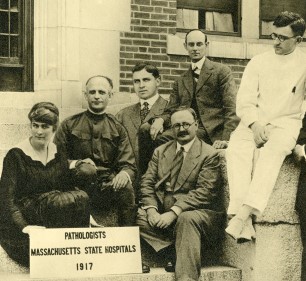
Warren Anatomical Museum Galley & The Center for the History of Medicine
Founded in 1847, the Museum collection includes anatomical artifacts, pathological specimens, instruments, and other objects. The Warren Anatomical Museum Exhibition Gallery is being redesigned as part of the larger Countway Library renovation, but in the meantime the museum collections and exhibits can be accessed online. You can explore their Archives for Women in Medicine, which includes the Myrtelle M. Canavan papers. Myrtelle M. Canavan (picture above) was the first woman to be named Curator of the Harvard Medical School's Warren Anatomical (1924 -1945). You can also view the online exhibit This Abominable Traffic: Physicians on Slavery and many more online exhibits on their website.
On view online Location: Francis A. Countway Library of Medicine, Boston, MA
Women of the Museum, 1860–1920
When women first started working at the Museum of Comparative Zoology in the late nineteenth century, they were hired as assistants, secretaries, and librarians—and only rarely as curators. Often assigned repetitive and mundane tasks, they nonetheless made significant contributions to the museum's early history. This exhibit highlights their work for the first time. While their expertise and extensive knowledge of the museum's collections may not have been fully appreciated by their contemporaries, today we recognize how their work allowed the museum to grow into its role as a center for research, teaching, and public programs.
On View Online Location: Harvard Museums of Science & Culture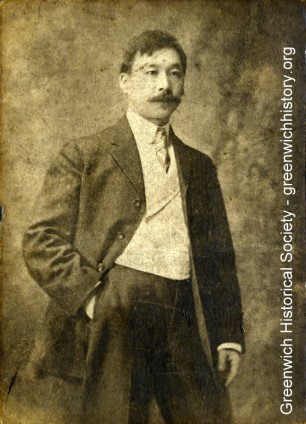
Sharing Genjiro Yeto’s Story
Genjiro Yeto (1867-1924), an accomplished Japanese-born painter and illustrator who played a key role in the formation of the art colony that thrived at the Holley boarding house in Cos Cob. Maggie Dimock, GHS Curator of Exhibitions and Collections, was interviewed by the National Trust for Historic Preservation's site (https://savingplaces.org/stories/genjiro-yeto-constant-holley-and-cos-cob-art-colony-influence-on-the-american-art-scene) about how the Greenwich Historical Society interprets Yeto's legacy at the Bush-Holley House. If you are interested in receiving a Japanese-language site guide to the Bush-Holley House, prepared by Noboru Uezumi please send an email to curator@greenwichhistory.org
On View permanently Location: Greenwich Historical Society, CT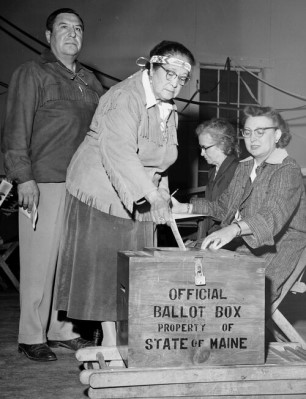
Stories of Maine: An Incomplete History
Leading up to Maine's 200th anniversary, the PMA and the Maine Humanities Council collaborated with partners and advisors throughout the state to consider the best ways to mark the occasion. Together, we selected stories about Maine's past and present and invited Mainers from the state's diverse regions and backgrounds to present them. The exhibition includes stories from a diverse group of Mainers; like James Francis, Penobscot Tribal Historian; Seth Wescott, Olympic snowboarder; and Jessica Leahy, Professor of Human Dimensions of Natural Resources. It acknowledges the varying backgrounds of Maine people. Curators: Diana Greenwold, Curator of American Art, and Mark H.C. Bessire, Judy and Leonard Lauder Director. Have Maine Stories To Share? Submit one one the museum website. (Image: Indians Vote for the First Time - Princess Watawaso of the Penobscot Indian Tribe at Old Town casts the first vote of an Indian on a reservation in Maine in 1955. The only Indians who voted previously were those who moved to cities and started paying taxes. Behind the princess is her husband, Chief Bruce Poolaw. Clerks (left to right) are Mrs. Mary Cross and Mrs. Hollis Monaghan. Bangor Daily News. Photo By Danny Maher.
Online and In-Person through Summer 2021 Location: Portland Museum of Art, ME
ASL Tour & Micro Tours of Lippitt House
A National Historic Landmark, Lippitt House has one of the best preserved interiors in America, allowing visitors to experience exceptional Victorian design and American craftsmanship. American Sign Language Video Tour videos make the Lippitt House Museum accessible to ASL speakers. Presented by native ASL speakers, the tour offers the same quality and complexity as the museum's traditional docent-led tours. The ASL video tour draws inspiration from Jeanie Lippitt who became deaf following scarlet fever at age four. Jeanie and her mother Mary Ann Balch Lippitt were instrumental in establishing the Rhode Island School for the Deaf. Online visitors can also take a virtual Micro Tour of Lippitt House Museum to see the furnished rooms and learn what life was like for the Lippitt family and the servants who lived and worked in the house in the 19th century.
Online & In-Person Location: Lippitt House Museum, Providence, RI