Underestimating Our Visitors: Part 2
Linda Norris explores how museums tend to overestimate our visitors' knowledge and underestimate what they're up for and how prototyping helps find out what works and what doesn’t in exhibits.
Michael O'Hare writes that our great art institutions are cheating us of our artistic patrimony every day, and if they wanted to, they could stop. This blog post will be sure to raise some questions.
How to Keep Audience Next From Clicking Unsubscribe
Dr. Manuel Pastor, professor of sociology and American studies and ethnicity, and director of the Program on Environmental and Regional Equity, at the University of Southern California, talks to Boston arts leaders about what it will take to stay relevant to an increasingly young and diverse audience.
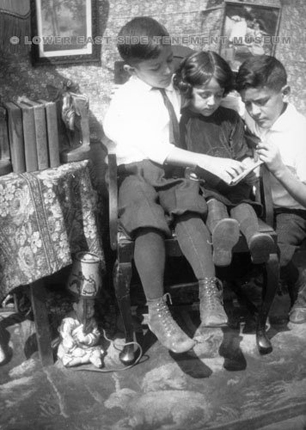
Three children from the Confino family, one of the families that lived at 97 Orchard Street, now the Tenement Museum.
How can museums foster empathy?
Rebecca Herz explores how museums can be more empathetic. Empathy is an ongoing, difficult struggle in ourselves and in our culture. Museums provide immersive, personal experiences. Looking at a portrait of someone, or visiting an exhibition about a historical figure or moment, these distant people are palpable and present.

Six Ways Personalization Trends Are Affecting Data in Museums and Cultural Centers
Personalization has been an increasing and unrelenting theme in much of the data collected regarding visitor-serving organizations – and it is begging for more attention in the world of cultural centers. Colleen Dilenschneider explores this trends and how it relates to museums.
A Practical (and Possibly Provocative) Approach to Leadership Transitions
Leadership transitions in the nonprofit sector occur regularly. For small and mid-sized nonprofit organizations, the average term for an executive director or CEO is about six years. With sufficient time and preparation, these transitions can be positive events that make an organization stronger, even when the transition involves replacing a successful executive director. Nonprofit Quarterly explores this topic using the recent transition at the Monthsire Museum of Science in Vermont.