
NEMA 2016 Publication Award Winners
By Scarlett V. Hoey, Program Administrator, ArtsWorester and NEMA YEP Co-Chair
Since 1994 the New England Museum Association’s Publication Awards have honored excellence in design, publication, and communication in the world of print and digital museum publishing. NEMA is pleased to announce the winners of this year’s annual Publication Awards. Judging was especially challenging and exciting this year, with over 200 entries from 65 museums in 11 categories.
This year’s judges were Sarah Baker, a contributing editor for Art New England, Jillian Domenici, an independent exhibit designer, and a third judge who requested anonymity (but trust us, they’re a publication judging wizard). The judges spent the day at the Longfellow House-Washington's Headquarters National Historic Site— while secluded in the Carriage House, they immersed themselves in submissions and discussions. NEMA is grateful to all the judges and to the Longfellow House for their generosity!
This year the judges selected 50 awards, along with an additional Best in Show. In this competition the judges were asked to consider not only the aesthetic appeal of a publication, but also the clarity of content, effectiveness of communication, and the quality of the material compared to the institution size and budget. The above criteria along with other markers were among the measures the judges used to evaluate the 2016 Publication Awards.
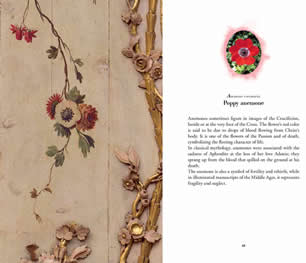
Best in Show was awarded to The Secret Language of Flowers: Notes on the hidden meanings of flowers in art, produced by the Isabella Stewart Gardner Museum. The judges found the iridescent green and purple-covered book submission “gorgeous” and the content “so visual and beautiful.” The book exemplified how to use an institution’s collection. The judges also appreciated the “tone and voice” throughout the book. The Secret Language of Flowers was a collaboration between the museum, an artist, and the book designer. This artist’s book is an invitation for all readers to learn about floral symbolism on display at Mrs. Gardner’s “Fenway Court.”
Books, Exhibition Catalogues, Newsletters, & Educational Materials
In the under $500K category, a book award went to Farming & Feasting with the Robinsons, from the Rokeby Museum. The book had nice organization, pertinent illustrations, and overall charm as a story and seasonal recipe book. The Little Compton Historical Society was acknowledged for a “nicely laid out” book that links the narratives of a town in The Stories Houses Tell. An honorable mention was given to the Natick Historical Society for their straightforward and informative book, Have You Ever Wondered…?, which explores the town’s various historical features. In the over $500K category, books from the Peabody Museum of Archaeology & Ethnology, Nantucket Historical Association, Martha's Vineyard Museum, and the Yale University Art Gallery were awarded prizes for their creative spreads, concise text, and high quality images.
The judges selected exhibition catalogues for their overall impression, which came from their smooth flow, impressive visuals, and precision in text. Wellesley College’s Davis Museum produced a catalogue (Bunny Harvey: Four Decades) that was described by one judge as “a cut above” because of the excellent layout. Also winning prizes in this category were In the Wake: Japanese Photographers Respond to 3/11, produced by the Museum of Fine Arts, Boston, and Land Ho!, a digital exhibit catalogue from the Fitchburg Art Museum. Of note, the Land Ho! catalogue marks the first time NEMA has given a Publication Award to a digital exhibition catalogue. This well presented catalogue encapsulates all the necessary information while highlighting the local community partnership between a museum and their local university, Fitchburg State University. In the under $500K, Middlebury College Museum of Art won for their catalogue, Naked Truth: Approaches to the Body in Early 20th Century German-Austrian Art. An honorable mention went to the Isabella Stewart Gardner Museum for their “inventive and pretty" Charmaine Wheatley: Souvenirs.
Many excellent newsletters were submitted this year, but the judges narrowed it down to a few that exhibited an excellent balance of stimulating content complemented by outstanding imagery. Given the chance, any museumgoer could easily be absorbed in these newsletters. Winning first place, with a magnificent golden gown gracing the cover, Historic Deerfield - The 50th Anniversary of the Helen Geier Flynt Textile Gallery made one judge profess, "I am not a member, but I am going to join to get the newsletter." The other winning newsletters from the Ogunquit Museum of Art, Historic New England, and the Portland Museum of Art, were also praised for their graphics and flow.
Judges selected education materials that had a sense of character, engaged the viewer in creative ways, and encouraged the participant for details using prompts and conversation starters. These award-winning, in-depth family guides and kits came from the Art Museum at the University of Saint Joseph, the Peabody Essex Museum, Yale University Art Gallery, Boston Children's Museum, and the Windsor Historical Society.
Marketing & Development Materials, Invitations, and Annual Reports
Recipients in the Marketing/PR category entertained the viewer visually and stoked their curiosity to learn more about the advertised event. The Peabody Essex Museum used its event materials for All At Once Upon A Time in an “inventive” way to inspire patrons to unplug from their phones for full immersion in the Present Tense Initiative performance. The Old State House/Bostonian Society produced the Elizabeth Bull Postcard, which showcased a 1731 wedding dress with text hinting at a mysterious story. The judges also selected Endicott College - Walter J. Manninen Center for the Arts, Boston Children's Museum, and the Museum of Fine Arts, Boston for their eye catching and effective marketing materials.
Since no museum can function without the lights on (except maybe a bat museum), the use of high quality and carefully crafted development materials is essential to the mission of an institution. In the under $500K category, the Brick Store Museum’s Capital Campaign Materials evoked a strong feeling of community with its imagery. The Marblehead Museum and Historical Society simply and ‘e-fish-ently’ communicated the museum’s goals and needs with its J.O.J Frost Gallery / Prospectus Package.

John Orne Johnson Frost, c1920s
Among institutions with over $500K budget, the winning development materials entry came from the Museum of Fine Arts, Boston, for its Museum Council Direct Mail Package that endeavored to reach a younger audience with its enticing message and colorful imagery. In second place, the Peabody Essex Museum went above and beyond with its plethora of fundraising materials, complete with a functioning kaleidoscope, for the Imagine Gala. Third place was awarded to Plimoth Plantation’s materials for their fall fundraiser A Night of Film and Music. Plimoth’s fall fundraiser material was described as “simple, but effective” with the usage of warm colors and sleek style.
The awarded invitations all shared a graphic straightforwardness with a flare of individuality. This category included invites with layers that required more interaction between the recipient and the object. The Pan American Modernism exhibition announcement from the Art Museum at the University of Saint Joseph’s was impressive for its graphic work and enjoyed by the judges because of the different layers of information. The Isabella Stewart Gardner Museum Special Reception and Preview: Carlo Crivelli presented a beautiful overleaf that tied the whole invitation together. The Strandbeest invitation suite by the Peabody Essex Museum featured the inclusion of a poster that the recipients could hang on a wall. The University Museum of Contemporary Art at UMass Amherst, Irelands' Hunger Museum at Quinnipiac University, and the Ogunquit Museum of Art all received awards for their design work and striking details. The Hill-Stead Museum was an honorable mention for their Dinner-Auction Game Night 2015 invite. This unique Dinner-Auction invite was fun for its gameshow spinning wheel that provided for recipients with all the necessary information.
Understanding a non-profit’s financial breakdown is not always easy—the chosen annual reports communicate to patrons and donors in a straightforward and considerate manner how their money was spent. This year, prizes went to the Boston Children's Museum, Historic New England, and the Emily Dickinson Museum, which all used images of visitors to demonstrate enthusiasm for the institutions, and dedication to their core mission.
Digital Platforms and Supplementary Materials
The judges picked three stand out websites from the crowd for their graphically compelling visuals, user-friendly interface, and, most importantly, their ability to encourage curiosity in the user. First place went to Newport Restoration Foundation’s aesthetically-pleasing conference website, History Above Water (www.historyabovewater.org). The website submerges the user into the depths of the climate change issue with an engaging animation that doesn’t shy away from addressing an important concern. The conference website is also easy to navigate and full of content for attendees and visitors. Second Place went to the Isabella Stewart Gardner Museum for their exhibition microsite, Ornament & Illusion: Carlo Crivelli of Venice (www.crivelli.gardnermuseum.org). The site is informative while not being overwhelming. The artworks can be magnified using just a scroll of the mouse. One juror commented the Crivelli website was “beautiful.” The Old State House / Bostonian Society won third place for Blood On The Snow (www.bostonmassacreplay.com), a comprehensive and captivating guide to the event. These websites all made the judges regret missing the events.
Covering a vast spread of objects and ephemera, the judges had a tough time sorting through the supplementary materials. Awards were given to museums for their creativity and ingenuity. The Peabody Essex Museum’s supplemental materials for its Strandbeest Exhibition included everything from tattoos to T-shirts. It was out-of-the-box marketing and fun, and deserving of a first place award. Tied for second place, Old Colony History Museum’s sleek design of its rebranded Identity Materials impressed the judges and Plimoth Plantation’s February Vacation guide provided useful information for families. The MIT Museum’s Welcome Brochure and Map received an honorable mention for its well-laid-out design. Bearing in mind the range of materials submitted, the judges did their best picking a strong corps of materials.
A Note on Publications of all Types
From the small historical societies to the internationally recognized museums, institutions of all shapes and sizes can produce excellent publications that engage the viewer and encourage donors to become part of the institution. NEMA institutional members continue to produce outstanding publications at all budget levels. The creativity and resourcefulness of the New England museum community is highlighted in the works of the 2016 Publication Award recipients. The entire submission field was of high caliber, and the judges had to make tough choices in their selections. Thank you to all the museums and creators that participated this year. The 2017 Publication Awards will open next winter and all NEMA institutional members are eligible to enter the competition.