
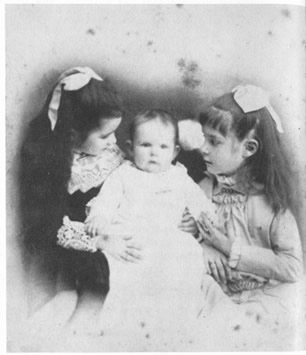
In Their Father’s Image: Susy, Clara, and Jean Clemens
Samuel and Olivia Clemens’s three daughters – Olivia Susan Clemens, born 1872, Clara Langdon Clemens, born 1874, and Jane Lampton Clemens, born 1880 – were highly individual and spirited individuals in their own right. Growing up in the great Hartford house, they lived a privileged life full of social activity, play and learning – with the added benefit of having a warm and witty father, an equally warm and brilliant mother, and servants who were as often playmates and admirers as service staff. It was an idyllic existence -- full of storytelling and wondrous guests and games -- but as the daughters grew they found that the sheer force of their father’s personality, and his fame, could be a burden as well as an asset. This exhibit offers an in-depth look at these three extraordinary women and their sometimes difficult lives. A wealth of artifacts and original documents from the museum’s extensive collection, as well as important items on loan from other institutions, help to tell these dramatic stories.
On view through January 24, 2017. Location: Mark Twain House & Museum, Hartford, CT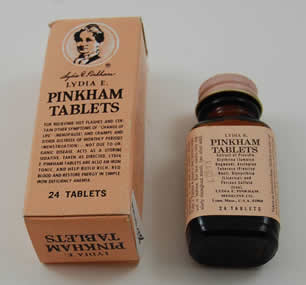
To Your Health: Examining the History of Modern Medicine
What advances have benefited public health? How has healthcare changed in Kennebunk since the 1800s? Some of the answers are obvious due to modern technology advances while lead to controversy, such as the use of vaccines and the effectiveness of homeopathic medicine. Up until the late 19th and early 20th centuries, almost all healthcare in the United States took place at home, with domestic medical manuals found in nearly every literate household. As recent as the mid-20th Century, Kennebunk had an effective version of what might be called socialized medicine in the form of the Kennebunk Health Association. Interactives in the exhibition will have you pondering your family’s experiences with disease and survival. Visitors to the galleries are asked to share their own experiences, too. Come explore objects and artifacts related to healthcare; including Lydia E. Pinkham's Vegetable Compound that she had developed in her kitchen to treat the medical problems of her female friends and family members. Comprised of black cohosh, life root, unicorn root, pleurisy root, fenugreek seed, and a substantial amount of alcohol, Pinkham's Vegetable Compound claimed to bring relief to women during the menstrual cycle by alleviating menstrual cramps, and also during menopause by counteracting depression, hot flashes, and other symptoms.
On view through the end of November. Location: Brick Store Museum, Kennebunk, MEPort Of Portsmouth: War, Trade, & Travel
A new permanent exhibit opened on July 1 in the new Montrone Family Gallery in Thales Yeaton House. The exhibit focuses on the maritime history of Portsmouth and the Seacoast, showcasing a collection of models and paintings of ships built in Portsmouth and the stories of those who sailed them. Eight beautifully-crafted models of Portsmouth-built sailing ships, originally collected by Joseph Sawtelle, form the centerpiece of the exhibit and trace the urgency of the American Revolution, the history of the Triangle Trade and the knife's edge balance of the Civil War. Personal items, including a gold engraved mourning ring owned by Captain James Hickey, reveal imported social customs. Fine art portraits of Portsmouth-related ships, such as the Sarah Parker Rice, named by Gov. Ichabod Goodwin for his wife, echo themes found elsewhere throughout the museum.
Location: Strawbery Banke Museum, Portsmouth, NH
The Finishing Touch: Fly Fishing Wine Label Art
In 1996, John Olchewsky of Enumclaw, Washington, was asked by Lange Winery to tie a classic salmon fly for use on one of their wine labels. John started as a steelhead fly tyer and made the transition to classic salmon flies in 1986. He chose the Dawson, a mixed-wing fly by Kenneth Dawson that was introduced at the end of the nineteenth century. George W. Kelson’s interpretation of the original pattern was followed for John’s creation. John Ricco photographed the fly, and the label was then printed to give the appearance of a mounted photograph. Learn about Fly Fishing with a visit to AMFF’s Leigh H. Perkins Gallery, exhibit on view through the end of summer.
On view through the summer. Location: American Museum of Fly Fishing, Manchester, VTThe Pursuit of Happiness: An Indigenous View
The museum was among 9 other national winners for the Institute of Museum and Library Service awards being honored at the White House in Washington DC this past June. The Eastern Woodland Basket Exhibit highlights ash splint baskets from southern New England. Come view the beautiful birchbark containers, stamped baskets, and porcupine adorned containers. Explore Narragansett history through The Pursuit of Happiness: An Indigenous View which reflects on the denial of our rights to life, liberty, and the pursuit of happiness.
Location: Tomaquag Museum, Exeter, RI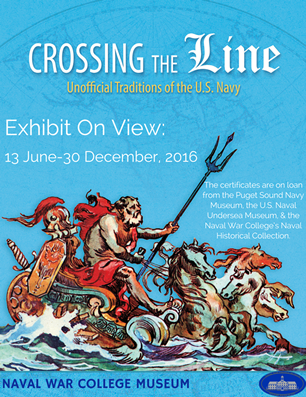
Crossing the Line: Unofficial U.S. Navy Traditions
“Crossing the Line” is a term used when sailors cross the Equator; however, sailors participate in many other unofficial U.S. Navy traditions when they sail into distant waters for the first time during their naval service. The ceremony serves to instill a sense of camaraderie among the crew. The initiated receive decorative certificates filled with salty language and drawings of mermaids, tridents, anchors, and dragons to document what they accomplished on their journey. The certificates on display in this exhibit, dating from 1908 to the present, commemorate the crossing of the equator, as well as other significant crossings such as the Arctic Circle, the International Date Line, and the Panama and Suez Canals. Crossing the Line: Unofficial U.S. Navy Traditions was designed and produced by the Puget Sound Navy Museum.
Advanced reservations required