
Meet your museum colleagues around New England! It’s often too easy for colleagues to feel isolated in their own institutions—we hope this feature will help close the gap. We also hope that it reinforces your own joy in your work and encourages you to recognize your own positive impacts.
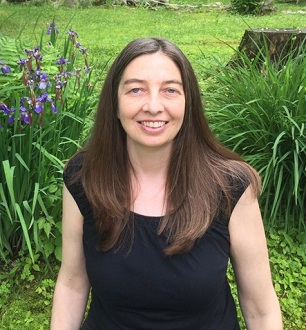
Miriam Block is the executive director of the Heritage Winooski Mill Museum and has a background in textile arts. The museum examines the industrial, cultural and social history of the 19th and 20th century mill era at Winooski Falls and Vermont, strives to preserve collections and shares stories with exhibits, programs and publications that make historical events relevant to 21st century issues.
Tell us about yourself.
I’ve been working as the director of the Mill Museum for 3 1/2 years now. It’s been a rather unconventional journey getting to this point. I earned my BFA in textile design from RISD in the early 90’s. During college, I dabbled with the idea of pursuing a museum career and did a summer internship in the textiles department at the Cooper Hewitt. After graduating, I worked as a wovens designer at a mill in South Carolina. A few years later, I moved back to NYC (my hometown) to work for a tech company, training other designers in how to use a proprietary textile design software.
I took a break from my career when my daughter was born. When she was a toddler, we started going to family museum programs around NYC. Our favorite was at the Noguchi Museum in Queens. I was so inspired by Heather Brady, the director of education, I wanted to do what she did! I was fortunate to meet a handful of supportive museum educators who encouraged me to go for it. After volunteering with the Guggenheim’s Learning Through Art program for a year, my family made a life changing decision to move to Vermont. Shortly after we moved, I was selected to participate in a graduate level teaching artist course sponsored by the Vermont Arts Council, Saint Michael’s College, and a handful of local arts organizations. The program was a great way for me to connect with local VT art educators and discover the position at the Mill Museum, which was a natural fit for my background.
Can you expand on how your background as an artist influences your work as a museum director, or vice-versa?
As an artist and designer, I am a creative thinker and problem-solver. I love the process of brainstorming, coming up with unique solutions, and then implementing them.
Also, I am a big supporter of arts-integrated programming. The museum has hosted quite a few art-infused programs: music concerts, dramatic performances, weaving and dress making classes, to name a few. I’m always looking for ways to incorporate the arts into school workshops, to give some kind of expressive outlet for participants to engage with museum content.
You are part of the Vermont Curators Group whose “2020 Vision: Seeing the World Through Technology" project is nearing – how does your site fit in with the vision?
Historically, textile manufacturing has been an innovative industry. I thought it would be interesting to use this upcoming statewide initiative to look at the technology happening in textiles today. The upcoming exhibit, Capacity of Cloth, brings together six artists working in the Textiles and Materiality Research Cluster of the Milieux Institute for Art, Culture and Technology at Concordia University in Montreal. The artwork on display will highlight an ongoing revolution of textiles and new technologies that are interwoven with social change. The stimulating exhibit, juxtaposed with historic mill artifacts, will give viewers an understanding of how far innovative textiles have come.
Your site has Lewis Hine photographs from his visit to the area in the early 1900’s. How does your museum facilitate meaningful conversations with visitors on child labor and the immigrant workers of the mill?
School groups often visit to enhance their learning about child labor and working conditions during the industrial revolution. Standing in the historic mill, in front of an actual power loom, really helps set the tone for what it would have been like to work there. Students spend time looking for clues about what might have been hazardous. They are pretty good about recognizing the exposed gears that could grab loose clothing or hair. The Lewis Hine collection of photos provide a compelling jumping off point for inquiry discussions about what influenced families to make the decision to have children work rather than go to school.
The Emergent Media Center at Champlain College recently partnered with the museum for a Human-Centered Design Challenge. What was that experience like working with college students at your historic site?
Working with college students is always energizing because they can look at things from a fresh perspective. The EMC students made some creative proposals for new ways to engage visitors and incorporate interactive technology. I mentioned to the group that I would like to update exhibits by making connections to current issues. For example, our Child Labor exhibit shows Lewis Hine photos from the early 20th century, but does not explain how child labor is still a global problem. To address this issue, one student created a mock-up of a searchable database where visitors would be able to check if their clothing was manufactured in a country where children are exploited and working in hazardous conditions. The database would be a powerful way for the museum to present more current and socially responsible content. I am really hopeful that it is something we can continue to develop because I would love to incorporate it!
Is there a piece of advice that you would give to someone new in the field?
Don’t be afraid to ask for help. I have found that other museum professionals have been very generous with sharing their knowledge. It’s a really supportive community! Also, don’t be afraid to share your ideas or think outside of the box. Fresh ideas and perspectives are valuable!
What lessons has your work life taught you?
Collaboration is essential! Success comes from pairing up with others whose talents can complement your own.
What is on your museum and historic sites bucket list (things to do, places to visit)?
Since moving to Vermont six years ago, I’ve been working my way through all that New England has to offer. One place on my bucket list right now is the Plimoth Plantation. Last year, I discovered that my husband and two kids are direct descendants of three Mayflower passengers, so it would be fun to go there with the family and check it out.
Is there anything else you would like to add?
I am happy to say that I have just completed my Masters in Education (arts concentration) from Saint Michael’s College! The program was very flexible and gave me plenty of opportunities to approach pedagogical practices from the perspective of a museum educator. My capstone looked at how the Mill Museum could be more engaging and inclusive of first generation Americans living in the community. For the study, I invited a diverse group of Winooski high school art students to create artwork and co-curate a new exhibit in response to museum artifacts. Inspired by a message written on a vintage postcard, students created paintings and personal narratives of their favorite local hang-outs. At the exhibit opening, students shared their perspectives with city officials and community members. The project really empowered the participants and affirmed their sense of belonging. Going forward, I hope to facilitate similar projects.