
Milk, Gas, and Mary Cassatt? How these museums are redefining ‘essential’
By Meg Winikates, Arts & Culture Correspondent, TocTic Times
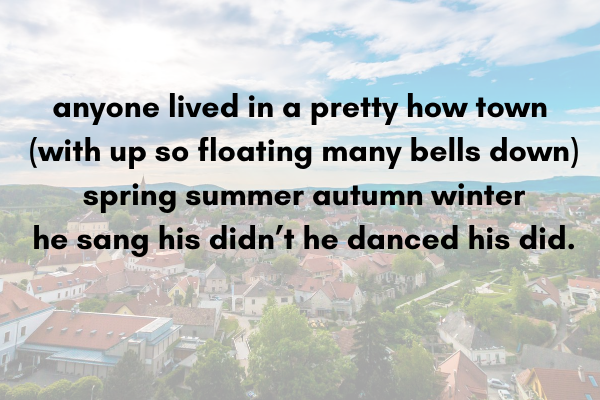
Welcome to spring 2023 in Pretty How Town, a small New England city once described by poet e.e. cummings, and the unlikely home to a museum renaissance in our post-COVID19 vaccine world. How did the three museums in this city, who were not so much “friends” as “friendly acquaintances,” grow from pleasant neighbors to key elements of the Pretty How life?
In 2019, three museums existed in the greater Pretty How Town area. First, right in the center of town sat the local historic house, home to Anyone & Noone, famous lovers of the poem. Anyone & Noone Historical Society (ANHS) offered house and garden tours, literary themed programming, and a locally popular summer poetry and music festival. Second, the Tree By Leaf Nature Center (TBL) featured a strong set of children’s programs and interactive exhibits in their treehouse building, as well as maintaining some lovely hiking trails in the neighboring conservation land. However, they suffered some identity confusion; visitors frequently confused the nature center for the garden center up the street. Staff joked that their unofficial motto was “No, we don’t sell rhododendrons.” Lastly, the Many Bells Museum (MBM), a small art museum with collections mostly focused on New England artists and a handful of minor Impressionist pieces donated by a local collector, was especially known for their studio art classes for adults, but had limited public opening hours and a brand-new director when the coronavirus pandemic hit in early 2020.
In March 2020, all three museums shut their doors, unsure when, how, or whether they’d reopen. None had massive endowments, but neither did they have large staffs or (fortunately) any large building projects or maintenance issues at the time. As so many museums did, Pretty How’s trio of museums jumped into virtual projects in the first few weeks and months of the pandemic, reviving older content already online and transitioning planned events and exhibitions to online experiences. Additionally, ANHS offered their garden space to instructors from the local yoga studio for livestreamed plein air classes, and put their ongoing archive digitization project into overdrive, recruiting over 200 new digital transcription volunteers from 39 states. In the three months of lockdown, director Maria Timperi-Malone reports, they transcribed, edited for clarity, and digitally published over 300 letters, more than in the previous two years combined. TBL provided daily emails to members with at-home and backyard nature appreciation activities for ages 2 to adult, and converted all their scheduled school visits for that spring to online classroom formats, exploring the conservation land using drones equipped with cameras. MBM mailed art-making kits to families that were on local schools’ subsidized lunch lists, and worked with a nearby YMCA to use MBM’s more expansive parking lot for a no-contact food pantry drop-off and pick-up system.
As the pandemic showed signs of the first wave abating, MBM director, Tomiko Taira, reached out to her fellow directors with a suggestion: all three staffs would need training in new cleaning procedures, enforcement and de-escalation techniques for new visitor rules and behaviors, and also continuing support for those staff members still dealing with sick family members or ongoing childcare—why not pool resources?
“I did not think it would last,” says TBL director Steven Connolly. “The daily operations of our three facilities were so different, anything beyond the absolute basics seemed like it would just be too specialized to make the cross-training worth it.”
“And aren’t you glad you were wrong?” rejoins Taira jovially. All three directors agreed to have lunch with me at MBM’s terrace café; even two years into a coronavirus vaccine, the preference for outdoor gatherings with lots of fresh air lingers, and for the 2021 summer season MBM expanded their café seating at the expense of their parking lot, a decision Taira stands behind.
“Lower attendance caps meant too many empty parking spaces anyway,” she shrugs, “so we put bike racks in several of them, and now we also have a patio for our café that serves three times the number of people we used to when we had higher attendance limits. What’s to regret?”
Timperi-Malone, the quietest of the three, chuckles as I finally notice that Taira speaks nearly perpetually in questions. “It’s both annoying and delightful,” Timperi-Malone notes. “So many of us in the museum field are creative people, but the very nature of what we do privileges stasis rather than motion. When you are trying to have a conversation with someone who answers every statement you make with another question, it really does make you think about why we do what we do the way we do it.”
Which, Timperi-Malone adds, is why she started asking questions too; not just by surveying her members, Society Friends, and general visitors, but all stakeholders, from school teachers and administrators to neighboring businesses to staff and board members.
“I finally had evidence for some of the things that had been bugging me quietly for years,” she hides a smile in her teacup. “Why were we not as accessible as grocery stores? Why were we not as helpful as libraries? Why were we not as comfortable as coffee shops?
“The visitor comments, the local business feedback were helpful, of course, but major credit goes to the staff. The added pressures of dealing with the pandemic made staff more honest about their ongoing stress levels, and what support they needed. I could use that during my frequent crisis check-ins with the board, which meant board members became more aware of what was going on with the museum in general. And more willing to roll with changes we put forward.”
Fortunately, some of the problems highlighted by both museum attendees and museum insiders had mutually beneficial solutions.
“COVID gave us the mandate to rework all our staff time,” Timperi-Malone says. “There wasn’t any excuse not to offer staff who needed it flex time; we were all seeing each others’ living rooms, after all, and meeting kids who needed shoes tied during a staff meeting, you know? So we started our reopening discussion not with what visitors would need to feel comfortable, but what staff would. People wanted to be able to spread out the hours they were in the office, so there were fewer folks in the building at a time, and suddenly the morning people and the night owls were self-sorting into something like shift-work, where there was a little overlap to allow for meetings, but instead of us all being in 9 am to 5 pm we suddenly had staff coverage onsite from 7 am to 9 pm, pretty much weeklong.”
This solved one of the systemic issues with museum attendance; public opening hours could be increased, as well. “Great for visitor comfort and accessibility,” Timperi-Malone summarizes, “more options for when to visit, fewer crowds, more flexible to accommodate different kinds of work schedules.” By September 2020, using staggered staffing, ANHS was able to be open from 8 am to 8 pm, six days a week, a 50% increase in opening hours from their pre-pandemic calendar. The other two museums followed suit, also adjusting operating hours and staff coverage for health and comfort. In contrast to many museums who limped through drastically reduced visitation before the arrival of the COVID19 vaccine, Pretty How’s museums saw better attendance than comparable institutions in the region. In the years since, all three museums have seen notable increase in visitation overall.
As part of their proposed collaboration, in the summer of 2020 MBM remotely hosted staff from all three museums for a series of ongoing training opportunities, funded by the local cultural council, first on coronavirus-related topics, but eventually growing to include anti-racist and counter-bias discussions. By 2021, this collaboration expanded to include peer to peer mentoring groups, and highly popular staff swaps among the three organizations. “My social media manager still wants to know when he can go back to TBL for a week tweeting in the trees,” Taira laughs.
“When you give me back my botanist,” Connolly replies, referring to the current Scientist-in-Residence at MBM, Lara Alaly, who has been working with MBM’s collection of botanical illustrations and herbaria. The exhibit based on her research is due to open next month. Other staff-swapping projects have included everything from as basic as job-sharing to cover for staff on parental leave, to translating educational materials into other languages, to planning a massive festival of arts and sciences, “Earth By April,” which was a tremendous draw for out-of-region tourists as well as a great local event.
TBL’s contribution to the proposed “COVID collaboration” came through an existing relationship with a local Montessori school, which served children pre-K through grade 5. “We were already planning some before- and after-school programming with them before corona hit,” Connolly says, “and though I’ve banned the word since, I used it a lot that spring; we pivoted hard.” Since moving the majority of their exhibits to their Tree House back in 2016, TBL had under-utilized space in their older building. The school was looking to expand their pre-school offerings to include younger children, and already had the expertise and certifications needed.
“And all of a sudden we had on-site childcare for staff with littles,” Connolly makes a ‘ta-da’ flourish with his hands that belies the amount of work involved in establishing a satellite school program in a building converted from an old mill. Staff from all three museums now get a discount on school tuition, in exchange for ongoing programming for students of all grade levels at each museum.
“It’s been fabulous even for staff without children of their own,” Taira says. “Our education and exhibit staff get to pilot all sorts of things with these students that we then turn into programs for other schools, or family festivals, or exhibit components.”
And what of the other COVID-inspired connections: the garden yoga, the food pantry, the art kits, the robot tree climbers? Have any of them had the same staying power as the staff-led work adjustments?
“Every family that got an art kit or picked something up at the food pantry got a free pass to come back when we reopened,” Taira says, “and some of them did and some of them didn’t. But working with the YMCA meant we suddenly looked a lot friendlier and more approachable to some folks than we had before. So long term, we’re seeing some new repeat faces around, and that’s great. Art and weightlifting, you can like them both, right?”
Timperi-Malone nods. “We’re still letting the yoga studio around the corner lead some classes on our grounds. We’ve actually had one instructor who is a poet herself lead a combination class, on writing and the body connection, which has been quite popular. For us, though, it was the everything else that happened, more than the pandemic, which changed things up.”
She goes quiet for a moment. “We had a really dedicated set of supporters, but tiny, and fairly homogeneous. And then when the civil rights actions escalated after the deaths of George Floyd, Breonna Taylor, and so many others, we knew we needed to do more. We changed much of the lineup planned for our summer poetry and music festival to center Black voices, Indigenous voices, stories and songs and actions from traditionally oppressed communities. We did a separate program series focused on poets as promoters of democracy, and got involved in some census outreach, and voter registration and education in the run up to the election. We worked with the board to change recruitment practices for both board and staff, audited all our staff duties and job descriptions-- even marketing language-- for hidden biases and unwanted barriers. We have always tried to tell the story of Anyone and Noone as the stories of ‘Everyone being Someone,’ to emphasize our common humanity, but we’re a lot louder about it now. And we’re making some progress.”
If hiring 3 new full-time staff, experiencing an attendance increase of 130%, and producing the wildly popular podcast Sleep Wake Hope and Then, featuring a diverse conversation among poets, artists, and activists of all backgrounds is ‘some progress,’ I note that Timperi-Malone’s standards are very high.
“And shouldn’t they be?” she rejoins, winking at Taira, who gives her a thumbs up for the question.
So what’s next? The three directors glance at each other, clearly conferring in the way of people who understand each other well, and they all nod.
“We’re very excited to announce that we’re bringing back Earth By April for this coming season,” Connolly says. “And we’ve built enough structure around it to make sure that it’ll continue past this year to be an annual event, which we’re hoping will become one of the signature cultural experiences of life here in Pretty How Town.”
Taira takes over. “We’re also excited to be able to say that our three organizations have jointly received a grant from the Institute of Museum and Library Services, to expand our school partnership program to all the elementary schools in the greater Pretty How Town area. Every family with students ages 3 to 12 will be getting free tri-museum memberships for the next year, underwritten by this grant. Those memberships come with dedicated tri-museum programming just for them, organized by school, grade level, or area of academic interest. We’re looking at a whole new model for ‘field trips,’ that involves entire families, their needs, their schedules, their interests, with teacher buy-in and additional curriculum support from the town library system.”
“The people of this town are essential to our existence,” Timperi-Malone concludes. “We want to be that for them, as well.” And if that’s ambitious? They’re in for the challenge.
“Wish by spirit and if by yes,” Timperi-Malone quotes.