
Shifting a Museum’s Voice Requires an Important Shift in Power
By Chris Newell, Executive Director and Sr. Partner to Wabanaki Nations, Abbe Museum
When a museum shifts its voice, it also shifts its power. A “museum’s voice” is the term I use to describe how a museum conveys its information. Museums wrestle at times with their voice, but we all collectively add to the complex conversation of humanity. Over time, the voice of a museum can change. When that change happens, it also shifts the power dynamic of the institution itself. As museums continue to diversify, this shift in power is the necessary step toward equity for all peoples and especially the education we provide.
The Abbe Museum began a Decolonization Initiative under my predecessor Cinnamon Caitlin-Legutko, and as a Passamaquoddy citizen and longtime fan of the Abbe, I watched the process intently with great interest. While the current terminology for what Cinnamon was doing is decolonization work, the crux of the accomplishments was a dramatic change in the museum’s voice.
Since 1928, the Abbe Museum has maintained a collection of artifacts of Wabanaki peoples originating with Dr. Robert Abbe’s private collection obtained mainly around the area of what is now Frenchman’s Bay in Maine. The creation of the museum and the display of Dr. Abbe’s collection from its inception always had a third person voice interpreting my people’s history. As a child, I can remember visiting the museum in the original Sieur de Monts location inside Acadia National Park and being entranced by the treasure of information presented before me. However, I was keenly aware that the space centered voices that spoke about us, and I took that away with me as part of my visitor experience.
Shifting the Abbe Museum’s voice was necessary to improve the visitor experience and the representation of power the Abbe has over the historical and contemporary narratives of Wabanaki peoples. As my fellow co-founder of Akomawt Educational Initiative, endawnis Spears, so eloquently says, “museums are colonial artifacts.” The idea of preserving a cultural history within a museum is a concept imported with European colonization. As Native peoples and museum professionals, we can observe and study how museums convey information about Native peoples to understand how the non-Native world views us. There is an embedded notion from the birth of the American conservation movement in the 19th century that, when it comes to Native peoples, museums are needed to “save” actively vanishing cultures. This notion is a powerful one perpetuated now for over a century without much regard for the living, dynamic cultures in existence in Indian Country. As museum professionals, this is a mindset we work actively to change, yet it persists. Imagine my confusion as a child entering the Abbe and observing the museum’s voice speaking to me as if Passamaquoddy people didn’t exist authentically in modern times.
The work to decolonize the museum is ongoing and involves multiple players, but it began with the content. The hardest part to achieve was a move to Wabanaki governance. The board of the Abbe Museum is now governed by a majority Wabanaki board of trustees. The board has restructured itself to include a Wabanaki co-chair. When it became time to search for a new Director, the job title changed to Executive Director and Sr. Partner to Wabanaki Nations. The Sr. Partner portion is an addition to the duties of the leader of the Abbe to maintain an active partnership with the living Native communities in Maine. This massive shift of governance began with the efforts of the Decolonization Initiative resulting in my hiring this year. I am the first Wabanaki executive director for the Abbe Museum and I work for a wonderful, supportive, and diverse board where my community peers have decision-making power. In the case of the Abbe, this result makes all the sense in the world. Many of us find ourselves looking at the present situation and wondering why it didn’t happen decades ago.
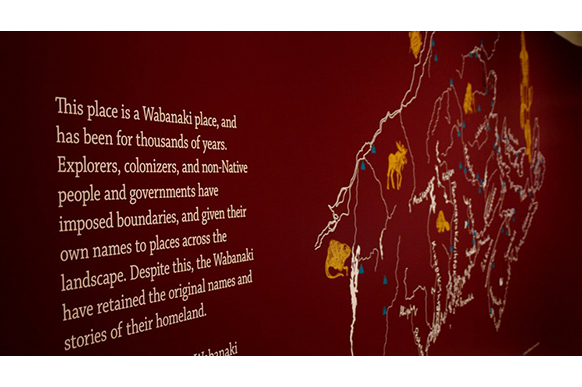
The voice of the Abbe Museum in 2020 has changed. With a Passamaquoddy community member as leader and a majority Wabanaki board, we now speak from a first person perspective. Changing our voice changed the way we do things. I must also recognize the team of people I work with now who began their own efforts before me and continue them now. We have a tremendous team at the Abbe. Having gone through the growing pains of the ongoing work to decolonize the institution, I came into a situation where everyone in the institution stood behind their work and were hungry and ready to continue to take steps forward for the future. I credit the synergy of our team members and our common purpose for the museum’s recent successes.
The change resulted in work that strengthened the voice of Wabanaki peoples in what is now a shared Wabanaki space. The change in voice of the Abbe resulted in the Abbe Museum’s Call for Justice for George Floyd and Systemic Change Toward Equity. As the team’s leader, I suggested we frame our statement around a Passamaquoddy linguistic term. As a decolonizing colonial institution, normalizing the idea that English is a foreign language and, at times, problematic is part of our continued efforts. We needed something to remind us of our collective humanity and with some guidance from Passamaquoddy linguist Roger Paul we framed our statement around the Passamaquoddy imperative Wolankeyawolotultiq (wool-an-kay-ow-lod-ool-tiqw), which translates to “take good care of each other.” The last words of our statement summing up what we all need to be doing as friends and neighbors in this world, “Wolankeyawolotultiq. Now and forever.” Using Passamaquoddy terminology as the framework brought Wabanaki cultural values of community and culture into the statement. By doing so, the English speaking public is brought to a place of common understanding of the long and sustainable history of our Wabanaki ancestors with an eye on centering those values for our collective futures.
Using my tribe’s language to frame the heart of the statement was important to me and the Abbe team, but also important to Wabanaki readers of the statement. Young Wabanaki children growing up in the state of Maine now see the Abbe Museum speaking to important issues in the same way their parents and schools frame the world for them. So, it could be said, another major impact of changing the Abbe’s voice is the empowerment we’ll see in future generations of Wabanaki children who can now see and reflect the notion of working in a position of intellectual leadership in the museum field in their own futures.
It’s longitudinal work. Results don’t happen when you want them. They happen when the time is right. But going forward, the idea of culture and community will become part of policy throughout the Abbe Museum in every part of what we do in the future. The idea is to make these changes permanent and continue to build on the areas we find success.
Every museum’s situation is different, but when it comes to colonial museums with Native collections I urge you to pay attention to the recent successes the Abbe has had in increasing equity within our own institution. In many cases, the content needs to shift and when that happens, I urge my fellow museum professionals to also consider shifting the power of the narratives to center Native voices. Land acknowledgements are a great first step. But, I emphasize they are literally the first step and must include actionable steps to follow. Shed your institution of the old habits of the 19th century thoughts about “saving” Native peoples and reflect the dynamic, vibrant, and living communities whose histories/cultures/art you are representing.
Equity in the power of what your museum conveys about Native people drastically improves the visitor experience for Native and non-Native visitors alike. Colonization is a complicated topic and multiple perspectives from voices on all sides makes the adults and children who enter your institution much more aware of how their state and country came to be. Not all of it is pretty, but it’s important for us human beings to look at history and be critical of the parts that were hurtful, acknowledge them, and most importantly learn from them to do better going forward. Changing our museums' voices and shifting power when applicable are steps we all need to make and continue making. I urge my fellow museum professionals to continually think about ways to change your own museum's voice for a better, more informed world.