
Think Outside: A Case for Outdoor Learning Environments at Museums
By Ali Kane, Tower Hill Botanical Garden, NEMA Fellow
Children spend less than 15% of their time outdoors. Due to increased academic and extracurricular responsibilities, the accessibility of indoor leisure activities, and a surge of urban population growth closing in on green space, children have been diagnosed with “nature deficit disorder,” a non-medical term coined by Richard Louv in his 2005 book, Last Child in the Woods. Louv connects the lack of exposure to nature to rising rates of childhood obesity, ADD/ADHD diagnoses, lower academic performance, and delayed physical and social development. Increasingly so, parents are keeping their children indoors, primarily out of concerns for safety. Therefore, playgrounds, parks, and other outdoor community spaces become abandoned and centers for dangerous activity, perpetuating the initial concern of parents (Karsten and van Vliet 152).
Museums, however, are uniquely positioned to provide an antidote to nature deficit disorder. Families, strapped for leisure time, look for quality opportunities to spend together, often expressing an interest to simultaneously learn and be entertained (Chapman 9) . While such possibilities are plentiful, museums that leverage their educational missions with people’s desire to play find a winning combination (18). Building upon this foundation, museums that look beyond their buildings’ walls can create safe, stimulating, and exciting outdoor learning environments (Chermayeff, Blandford, and Losos 47-60).
Creating Meaning in the Great Outdoors
Outdoor learning environments can take many forms, such as children and family gardens, science playgrounds, outdoor exhibits, and mobile museums. These settings encourage freedoms seldom afforded indoors. The scale of many outdoor learning environments offers choices of activities and multiple kinds of learning, especially kinesthetic, learning through physical activity (Chapman 20). Interestingly, when Ingunn Fjørtoft studied natural “landscapes as playscapes” for children, she used the words “play” and “learning,” nearly interchangeably, marking the importance of allowing children to discover and experiment through informal play in order to construct meaning, rather than focusing solely on structured education (39).
While outdoor learning environments can offer exploration of many subjects, it is an ideal vehicle for exploring science, providing an ever-present source of activity (Campbell 25). Science has a history and an ongoing reputation as an exclusionary field with underrepresentation of women and people of color. Additionally, many teachers feel unequipped to teach science in a factual and engaging way or are not provided adequate resources, so children are less likely to pursue these fields of study. However, careers and basic knowledge of STEM subjects have considerable economic benefits, promote active citizenship, and advance science and technological development (Archer et al. 918). Museums can leverage their educational missions and resources to fill this gap (Morgan et al. 36). Informal learning environments that allow everyone to be inspired and engaged with STEM subjects, regardless of social status or existing knowledge, can further a sense of self that includes interest, or even competence, in science, leading to more students engaged in STEM studies and professions (920).
Informal learning, such as that which occurs in outdoor learning environments, capitalizes on the individual visitor experience. Here, meaning is crafted from the visitor’s desire to have fun, their existing understanding of a subject, socio-cultural context, their time at the museum, and reflection after the visit. Making connections between the real world and visitor experience is imperative to quality learning (Benton). As outdoor learning environments are specific to place, ingrained in the natural world, children make more meaningful connection between their lives and the lessons, leading to long-term memories and knowledge (Yates and Sullivan 306).
In their study of culturally diverse families visiting the Science Museum in London, Archer et al. noted how facilitating cross-cultural meaning-making is especially important for museums (Archer et al. 934) . Taking into consideration the overwhelming scale of museums and their position as prestigious experts can be disorienting to those who don’t know “the rules” because of inexperience or different cultural norms (925). However, informal learning environments that allow families to connect to their own culture, nostalgia, and experience is important to encourage (934).
The authors point to the experience of an African family interacting with an exhibit on plows. The mother, who immigrated from West Africa, was able to connect her childhood memories and family heritage to the exhibit, providing personal and historical context for her children. In another family, the father, a Kurdish Turkish refugee, enthusiastically engaged with his children in an agricultural exhibit, again drawing upon cultural knowledge to bring the technological subject to life (934).
Conversely, when the same father took part in a “guess the object” activity with his children, such excitement was not fostered. As the museum staff person explained the mystery item, a hot water bottle, the father made an effort to connect the use of this object with his own experience as a child. However, his discomfort with the museum environment and English language caused him to apologize profusely and acquiesce “to the authority of the museum’s dominant knowledge and explanation” (926). Such disorienting experiences advocate for informal learning environments that promote cross-cultural understanding and safe opportunities for discovery.
What makes outdoor learning environments unique informal leaning environments is their inherent location in nature. Universal across culture and experience, the outdoor setting can work to eliminate barriers that can make museums intimidating or inaccessible to certain people (Campbell 387). Ethnobotany, the study of the interconnectedness of plants, people, and ecosystems is one such way museums can leverage the universality of nature. In the same ways the visitors to the London Science Museum derived meaning from their diverse experiences, ethnobotany can facilitate cross-cultural meaning in outdoor learning environments, especially for Native cultures (Mackin, Thompson, and Wilson 196).
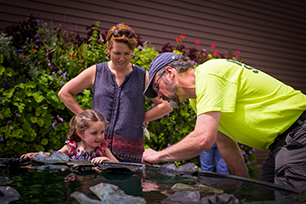
Additionally, learning environments that are targeted towards “families” versus “children” are more attractive as they promote adult learning and discovery as well. Oftentimes, these learning environments work as primers for adults to learn the rules and expectations of the museum and become more comfortable to explore overall (Chapman 136).
Why Learn Outdoors?
Informal learning and universality of the natural environment are just a few reasons museums should think outdoors. Notably, the styles of learning and play encouraged outside are markedly different than traditional indoor programming.
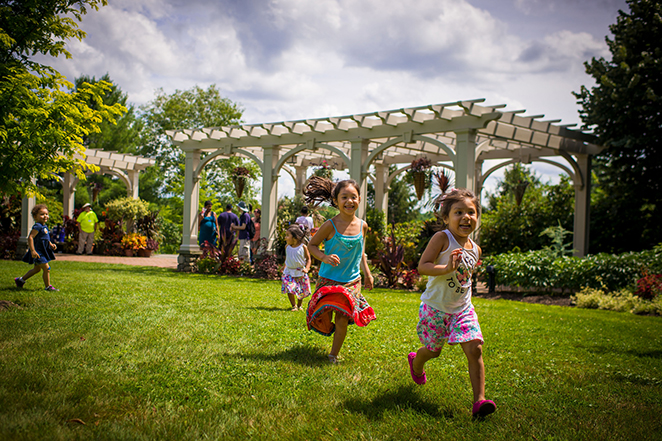
While inside most museums, children are constrained to quiet voices and careful movement, outdoor learning environments encourage joyful yelling, boisterous laughter, rambunctious climbing and lively running. Through outdoor activities, children are not only having fun, but are experimenting with their body movement, cooperating with each other, observing their surroundings, achieving success, and learning from failure, important facets of physical and socioemotional development (Fjørtoft 28; Chermayeff, Blandford, and Losos)
While engaging in functional play, such as running, jumping, and climbing, in outdoor learning environments, children are exercising, strengthening muscles, and improving coordination (Chapman 22). They also gain body awareness as they experiment and take risks during play. As children engage in activities that require lifting or balance, they learn more about their personal physical limits and abilities (Campbell 25). Additionally, activities in the outdoors, especially horticulture, train practical life and fine motor skills, such as tying plants to stakes (Campbell 25).
Exposure to the natural environment has been connected to many health benefits. Simply being to the outdoors can promote immune function. Positive emotional responses from play “can have anti-inflammatory effects, reducing levels of immune-triggering cytokines linked to chronic diseases such as diabetes, cardiovascular disease, and depression” (House et al. 10). Access to green space promotes healthy lifestyles; adults who live in areas with green space are three times more likely to engage in physical activity (11). Museums that open their grounds for outdoor leisure and learning can facilitate opportunities for visitors to reap such benefits.
Increasingly so, there are reports of children experiencing more isolation and loneliness. This may be attributed to to spending less time outdoors in common play spaces and parenting becoming a less collaborative effort. At one time neighbors, extended family, and other community members all partook in the collective upbringing of children; nowadays, parenting is focused around the nuclear family (Karsten and van Vliet 162). Communal learning and play spaces introduce children to other kids in the community. Activities in these environments encourage sharing, cooperation, and consideration for one another. Additionally, children learn how to express their feelings in order to advocate for themselves (Chapman 21).
Participating in outdoor activities instills a multitude of important social values in children. Gardening, for example, prioritizes responsibility in the care of plants, ownership of tools, and respect for others (Campbell 25). Through such attention to the natural world and other forms or outdoor play, children gain respect for living things, appreciation for the environment, and commitment to sustainability as adults (Chapman 21).
In a study of a garden-based education program at Brooklyn Botanic Garden, researchers discovered a multitude of academic benefits. Alongside horticultural topics, students honed their reading, writing, reasoning, and public speaking skills beyond a classroom lesson. The variety of assignments within the program gave them a purpose to develop these skills (Morgan et al. 42). Additionally, caring for and learning about plants allowed the students to have an interdisciplinary experience, exploring geography, art, and cooking at the Garden (43).
Similarly, adults often find inspiration in these hands-on science activities. By having an outlet to discover, succeed, and fail alongside their children, parents are enabled to be part of the learning experience as student alongside and teacher to their child. Such duty and purpose can lead to increased community engagement as parents are empowered to exchange knowledge and be part of a shared space and experience (Yates and Sullivan 311). Museums that harness the knowledge and passion of adults in outdoor learning environments as volunteer teachers or program facilitators will find a unique way to attract and steward new audiences (Chapman 127).
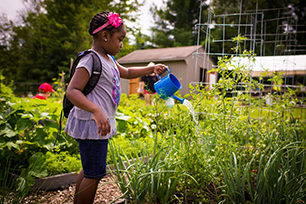
Particularly museums in urban areas can serve as common space for residents. Densely populated areas are often devoid of green and communal space. As parents observe modern play behavior, they express nostalgia for their own childhoods and yearn for positive outdoor opportunities for their own children (Karsten and van Vliet 154). Programs where participants have shared ownership in the care of the outdoor learning environment, such as a community garden, will promote an authentic sense of purpose, becoming an integral part of daily life as outdoor communal spaces once were (Morgan et al. 48).
Think Outside
As museums work to attract new audiences, adapt to societal needs, and innovate programming to be competitive in the cultural sector, outdoor learning environments provide a unique and important solution to many of these issues, especially addressing the nature deficit of today’s youth. The opportunities afforded outdoors through play and informal learning can, in fact, bring visitors closer to the institutional mission. Creating experiences that are memorable and meaningful cultivates long-time supporters and audiences.
Just as museums must respond to changing times, nature is dynamic. Landscapes change as plants, animals, and people interact with them, as seasons change, and elements grow or are destroyed (Mackin, Thompson, and Wilson 196). Therefore, outdoor learning environments are ideal breeding grounds for innovation and discovery. Families who return to the space will always have something new to learn. In fact, the temporariness of nature provides museums with an interesting dichotomy to the permanence of indoor collections.
Museums looking for innovative ways to deliver their mission and connect with new audiences must search beyond their walls for inspiration and embrace the great outdoors.
Works Cited
Archer, Louise, et al. "Disorientating, Fun Or Meaningful? Disadvantaged Families’ Experiences of a Science Museum Visit." Cultural Studies of Science Education, vol. 11, no. 4, 2016, pp. 917-939, ProQuest Biological Science Journals, https://search.proquest.com/docview/1844845122, doi:10.1007/s11422-015-9667-7.
Benton, Gregory M. "Visitor Meaning-Making at Grand Canyon's Tusayan Museum and Ruin." Curator: The Museum Journal, vol. 51, no. 3, 2008, pp. 295-309, CrossRef, doi:10.1111/j.2151-6952.2008.tb00313.x.
Campbell, Douglas P. "Green Gateways." American School & University, March 22, 2017, pp. 24-27.
Chapman, Grace E. Educational Programming Recommendations for the Family Discovery Garden: A National Family Garden Model at the American Horticultural Society's River Farm Headquarters, ProQuest Dissertations Publishing, 2008, Dissertations & Theses Europe Full Text: Science & Technology, https://search.proquest.com/docview/304629070.
Chermayeff, Jane C., Robert J. Blandford, and Carol M. Losos. "Working at Play: Informal Science Education on Museum Playgrounds." Curator: The Museum Journal, vol. 44, no. 1, 2001, pp. 47-60, CrossRef, http://onlinelibrary.wiley.com/doi/10.1111/j.2151-6952.2001.tb00029.x/abstract, doi:10.1111/j.2151-6952.2001.tb00029.x.
Fjørtoft, Ingunn. "Landscape as Playscape: The Effects of Natural Environments on Children's Play and Motor Development." Children Youth and Environments, vol. 14, no. 2, 2004, pp. 21-44, http://www.jstor.org/stable/10.7721/chilyoutenvi.14.2.0021.
House, Erin, et al. Outside our Doors: The Benefits of Cities Where People and Nature Thrive. The Nature Conservancy, Washington State Chapter, Seattle, Washington, 2016.
Huang, Chia-Hui, and Fang S. Lin. "Investigating the Development of the "Mobile Museum" from The Perspective of Service." Curator, vol. 59, no. 4, 2016, pp. 387, https://search.proquest.com/docview/1849164107, doi:10.1111/cura.12179.
Karsten, Lia, and Wilham van Vliet. "Children in the City: Reclaiming the Street." Children Youth and Environments, vol. 16, no. 1, 2006, pp. 151-167, http://www.jstor.org/stable/10.7721/chilyoutenvi.16.1.0151.
Louv, Richard. Last Child in the Woods. Algonquin Books of Chapel Hill, Chapel Hill, NC, 2008.
Mackin, Nancy, Judith C. Thompson, and Barbara J. Wilson. "Ethnobotanical Gardens: Their Role in Education and Conservation." Journal of Museum Education, vol. 36, no. 1, 2011, pp. 58-61, CrossRef, http://www.tandfonline.com/doi/abs/10.1080/10598650.2011.11510682, doi:10.1080/10598650.2011.11510682.
Morgan, Susan C., et al. "Environmental Education in Botanic Gardens: Exploring Brooklyn Botanic Garden's Project Green Reach." The Journal of Environmental Education, vol. 40, no. 4, 2009, pp. 35-52, Virology and AIDS Abstracts, http://www.tandfonline.com/doi/abs/10.3200/JOEE.40.4.35-52, doi:10.3200/JOEE.40.4.35-52.
Yates, Kimberly A., and Susan A. Sullivan. "Meaningful Learning and School-Based Gardens: A Multi-Case Study Conducted in the Harsh Climate of the Greater Yellowstone Ecosystem." Journal of Ethnographic & Qualitative Research, vol. 11, 2017, pp. 203-219, NDL-OPAC.
Photos Courtesy of Tower Hill Botanical Garden. Photo Credit Troy Thompson.