Finding the “Best Tech” for Your Museum
By Paul Orselli, Chief Instigator, POW! Paul Orselli Workshop, Inc.
I’m deliberately taking a very broad view of what “tech” is in this article. To me, technology deployed in museums is not only about the latest whiz-bang digital devices, but also finding the most suitable tools and materials for your particular situation (even if they might be considered “low tech.”)
But rather than getting hung up on “high tech” or “low tech” let’s talk about some resources for inspiration and ideas that can really point your museum in the direction of “best tech.”
STEAM Ahead with Tech AND Funders!
Of course incorporating any form of technology into your museum requires funding and/or resources. So why not start with areas of interest to potential funders and collaborators? Developing projects that plug into the overlapping worlds of STEM and STEAM are often a great place to start.
STEM is an acronym standing for Science, Technology, Engineering, and Mathematics. It is often expanded to STEAM, where the “A” stands for Art. In either case, the aim is to expose young people and adults to those disciplines through active, engaged learning opportunities (like those found in museums!) The good news is that funders of all stripes absolutely love STEM/STEAM. If you can develop a program (or build on an existing one) that leverages one, or all, of the STEAM topics, funders are often willing to provide money that allows you to purchase the best tech supplies to make those programs happen.
But where can you find examples of “best tech,” those tools and materials (and even methods and instructions) to incorporate STEAM into your own institution? Here below are a few of my favorite inspirational sites to find out about tech tools, materials, and resources. (Tech tools and materials change so rapidly, it’s a good idea to check back often with these sites.)
The Maker Movement
The “modern” Maker Movement (and I say “modern” because let’s face it, there have always been people who “make” stuff …) coincided with the advent of Make magazine and shortly thereafter Maker Faires. Check out Make magazine or visit a Maker Faire near you for some examples of tech you can bring into your institution.
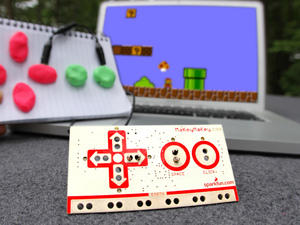
The great news in all of this Maker madness (even the White House hosted a Maker Faire recently!) for museums and exhibit designers is a renewed interest in creating new tools and materials for the Maker-verse and DIY (Do It Yourself) folks. MakerBot 3D printers and Makey Makey are obvious examples, but also check out the crowd-funding site Kickstarter(itself buoyed up by the Maker Movement) for cool examples of new tech to plug into your museum exhibits and programs before they hit the mainstream.
One additional note for history-oriented museums: even though science centers and children’s museums are making the most noise about creating (and getting major funding for!) “Maker Spaces” in their facilities, I really think history museums and historic sites, with their authentic collections of tools, machines, materials, and artifacts --- the stuff of Makers! --- have much to gain by aligning themselves with the Maker Movement.
Instructables
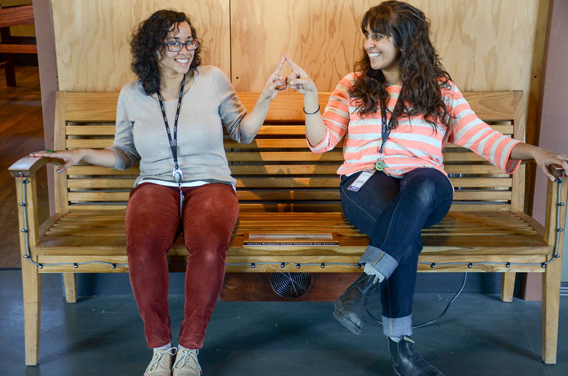
Need some step-by-step instructions (with pictures and materials lists) to make an Electronic Musical Bench or a Marble Machine exhibit? These ideas and thousands more, organized by categories such as “Furniture” or “Electronics” (and even “Exhibits”) await you at the Instructables website. If you have handy volunteers, you can turn them loose on the site (with a small budget) to have them create new “best tech” things for your museum.
Inventables
This site is totally geared toward “gear” --- new and interesting materials. You can find unusual stuff like magnet paper, suction-cup tape, or color-changing materials. Just browsing through the Inventables site will give you ideas for creating new exhibits or upgrading existing ones.
HCI+ISE Project
Human Computer Interaction (HCI) technologies, such as motion capture, multitouch, augmented reality, RFID, and voice recognition are beginning to change the way computer-based exhibits are designed and developed. The Human Computer Interaction in Informal Science Education (HCI+ISE) Conference was a first-of-its-kind gathering to explore and disseminate effective practices in developing a new generation of digital exhibits that are more intuitive, interactive, and social than their predecessors.
Held in Albuquerque, New Mexico in June 2013, the Conference brought together 60 museum exhibit designers and developers, learning researchers, and technology industry professionals to share effective practices, and to explore both the enormous potential and possible pitfalls that these new technologies present for exhibit development in informal science education settings.
You can find out more about the National Science Foundation-funded HCI+ISE project and download the final Conference summation document (packed with lots of cool ideas and resources!) here.
ExhibiTricks blog
I’ll give a shout-out here to my own ExhibiTricks blog, because it often features new, unusual, and inspiring bits of technology that are readily transferrable to museums and designers. We recently wrote about the technologically focused R&D wing of the Disney Corporation, called “Disney Research” that is showing off stuff like paper electric generators and robotic interactive signage that really push the envelope on thinking about ways to use technology in public places.
Whatever the size of your organization, or your institutional stance or capacity to implement technological additions to current exhibits and programs, it really is worthwhile to check out some of the resources and sites above to try and discover the “best tech” ideas for your particular situation.
Photo credits:
Electronic Musical Bench by The Tinkering Studio at the Exploratorium featured on Instructables
MaKey MaKey Product Photo Play Doh Mario